Productivity
Unlock Your Thoughts: A Guide to Voice Journaling with AI Transcription
Imagine capturing your thoughts, reflections, and ideas as effortlessly as you speak them, then having them instantly transformed into searchable, editable text. This is the promise of voice journaling AI.
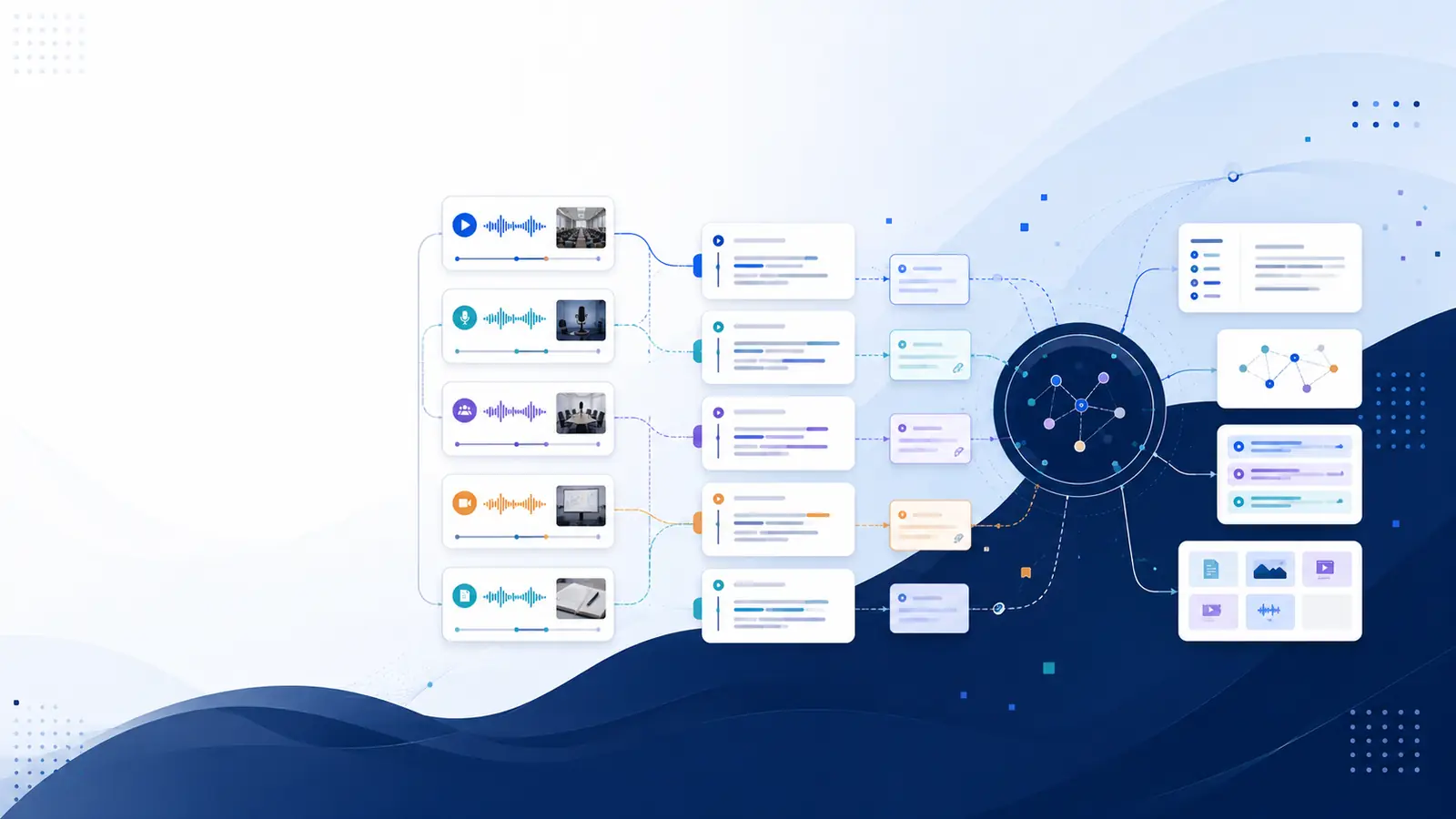
Introduction: The Power of Your Voice, Amplified by AI
Imagine capturing your thoughts, reflections, and ideas as effortlessly as you speak them, then having them instantly transformed into searchable, editable text. This is the promise of voice journaling AI, a powerful fusion of natural expression and advanced technology that is revolutionizing personal reflection and organization. You've heard of traditional journaling, perhaps even tried a voice diary app, but integrating AI transcription elevates this practice to an entirely new level. This article will guide you through how to effectively integrate AI transcription into your voice journaling practice for enhanced reflection and organization, unlocking deeper insights and making your personal growth journey more accessible than ever before.
The act of speaking allows for an unfiltered flow of consciousness, often bypassing the internal editor that kicks in when we write. This raw, authentic expression is a core benefit of audio journaling, fostering a more intuitive and less self-conscious form of self-exploration. By amplifying your voice with AI, you gain the immediate clarity of spoken thought combined with the lasting, analytical power of text. This innovative approach leverages reflective practice technology to transform fleeting thoughts into a structured, searchable knowledge base of your inner world.
What is Voice Journaling with AI Transcription?
At its core, voice journaling is the practice of recording your thoughts, feelings, and experiences using your voice rather than writing them down. Think of it as a personal podcast or an audio diary where you are both the speaker and the primary listener. It offers a fluid, spontaneous way to capture your mental landscape without the friction of typing or handwriting.
When we add AI transcription to this process, something transformative happens. AI transcription technology, often referred to as speech-to-text journaling, takes your spoken words and converts them into written text. This isn't just about convenience; it's about creating a bridge between your auditory and textual experiences. Instead of just an audio file, you get a timestamped transcript that accurately reflects what you said, word for word.
This means that your `AI voice notes` are no longer just ephemeral recordings. They become digital journaling tools, tangible documents that you can read, edit, search, and analyze. It's the best of both worlds: the uninhibited flow of verbal expression combined with the analytical power and permanence of written language. This synergy allows for a much richer and more versatile journaling experience, moving beyond simple recording to intelligent knowledge management of your personal insights.
Why Integrate AI into Your Journaling Practice?
Integrating AI into your journaling practice offers a multitude of compelling advantages that can profoundly enhance your personal growth and productivity.
First, consider the sheer speed and efficiency. Speaking is significantly faster than typing for most people. This means you can capture more thoughts in less time, reducing the barrier to entry for regular journaling. When you're in a flow state, words can pour out effortlessly, and AI ensures none of those valuable insights are lost. This makes it an excellent `productivity hack for journaling`, allowing you to fit reflection into even the busiest schedules.
Second, AI transcription provides unparalleled accessibility. For individuals with physical limitations, dyslexia, or simply those who find writing tedious, voice journaling with AI opens up a new avenue for self-expression. It removes the physical strain of writing, making the practice inclusive and less demanding.
Third, the ability to search your journal entries is a game-changer. Imagine trying to find every instance you mentioned "anxiety" or "goal setting" across years of handwritten journals or even raw audio files. With AI-generated transcripts, you can search keywords, phrases, or even semantic concepts instantly. This transforms your journal from a linear narrative into a dynamic database of your thoughts, making it an incredible tool for `personal growth AI` applications.
Fourth, AI transcription facilitates deeper reflection and analysis. Reading your own spoken words can provide a fresh perspective, highlighting patterns, recurring themes, or insights you might not have noticed while speaking or even writing. You can easily identify common emotional triggers, track progress on personal goals, or review your thought processes during challenging times. This textual format makes it easier to engage in `reflective practice technology`, turning raw audio into actionable insights.
Finally, it enhances organization. Raw audio files can be difficult to manage. With transcripts, you can easily categorize entries, add tags, and even generate summaries. This transforms your collection of `AI voice notes` into a well-structured archive, ready for review and synthesis. The integration of AI means you're not just recording; you're actively building a knowledge base of your inner world, allowing for more comprehensive understanding and better decision-making. The `audio journaling benefits` extend far beyond simple recording when AI is in the mix.
Choosing the Right Tools: Apps and Software for AI Voice Journaling
Selecting the appropriate `digital journaling tools` is crucial for a successful AI-powered voice journaling practice. The market offers a range of options, from simple `voice diary app` solutions to comprehensive `transcription software for journaling`. When evaluating tools, consider the following key aspects:
- Accuracy of Transcription: This is paramount. Look for tools that boast high accuracy, especially with different accents, speech patterns, and background noise. Some platforms use advanced AI models that offer superior results.
- Ease of Use: The interface should be intuitive, allowing for quick recording and easy access to your transcripts. A complex tool might deter you from consistent journaling.
- Search and Organization Features: Beyond basic transcription, how well can you manage your entries? Look for features like keyword search, semantic search, tagging, folder organization, and even AI summarization. This is where your `organize voice memos` efforts will truly pay off.
- Privacy and Security: Your journal is personal. Ensure the platform has robust privacy policies and secure data handling practices. Understand if your data is used for AI training.
- Export Options: Can you export your transcripts in various formats (e.g., TXT, PDF) for backup or use in other applications?
- Cost: Many tools offer free tiers with limited minutes, while paid plans unlock more features and transcription time.
Let's consider some categories of tools:
- Dedicated Voice Journaling Apps: These are designed specifically for audio journaling, often with built-in recording and some level of transcription. They might offer guided prompts or mood tracking.
- General-Purpose Transcription Services: Platforms like Libraryminds are primarily transcription services but offer robust features that make them ideal for voice journaling. They often excel in transcription accuracy and provide advanced knowledge management capabilities. For instance, Libraryminds offers automatic audio/video transcription with a multi-provider AI cascade, ensuring high accuracy. Its timestamped transcripts, semantic search, and AI summaries are particularly beneficial for anyone engaging in `speech-to-text journaling`. You can even record your voice directly in the browser.
- Note-Taking Apps with Voice Features: Some popular note-taking apps have integrated voice recording and basic transcription. While convenient, their transcription accuracy and advanced analytical features might be limited compared to specialized tools.
Here’s a comparison table to help you differentiate:
| Feature | Dedicated Voice Journaling Apps | General-Purpose Transcription Software (e.g., Libraryminds) | Note-Taking Apps with Voice |
|---|---|---|---|
| Primary Focus | Audio recording & reflection | Accurate transcription & knowledge management | Text notes with audio add-on |
| Transcription Accuracy | Moderate to High | Very High (often multi-engine AI) | Low to Moderate |
| Search Capabilities | Basic keyword search | Advanced keyword & semantic search | Basic text search |
| Organization Features | Folders, basic tags | Folders, tags, AI summaries, knowledge graphs, semantic search | Notebooks, basic tags |
| Privacy Control | Varies, check policies | Often strong, with explicit data usage policies | Varies by provider |
| Export Options | Limited (often just audio) | Extensive (TXT, SRT, VTT, etc.) | Limited (often proprietary) |
| Cost Model | Free basic, paid for premium features | Tiered plans based on minutes/features. View Libraryminds pricing plans. | Often included in larger subscription |
For a truly robust `AI voice notes` and `speech-to-text journaling` experience, a platform like Libraryminds, with its focus on high-accuracy AI-powered transcription and advanced knowledge management, stands out. It allows you to not only transcribe your voice entries but also to glean deeper insights through features like semantic search and AI summaries, which are critical for effective `reflective practice technology`.
Step-by-Step Guide: How to Start Your AI-Powered Voice Journal
Embarking on your `voice journaling AI` journey is straightforward once you have the right tools and a clear process. Follow these steps to establish a consistent and insightful practice:
- Choose Your Platform: Based on the considerations above, select an `AI voice notes` tool or `transcription software for journaling` that aligns with your needs. Many offer free trials or basic free tiers, so you can experiment. For comprehensive features like high-accuracy transcription, semantic search, and AI summaries, a platform like Libraryminds is an excellent choice.
-
Set Up Your Recording Environment:
- Find a Quiet Space: Minimize background noise for clearer audio and more accurate transcription.
- Use a Good Microphone: While your phone's built-in mic works, an external microphone (even a basic headset mic) can significantly improve audio quality.
- Speak Clearly: Articulate your words at a natural pace. Avoid mumbling or speaking too fast.
-
Establish a Routine: Consistency is key for any journaling practice.
- Time: Choose a specific time each day or week that you can dedicate to journaling. Morning is great for setting intentions, evening for reflection.
- Duration: Start small, perhaps 5-10 minutes. You can always extend it as you become more comfortable.
-
Start Recording Your First Entry:
- Open your chosen app/software.
- Hit Record. Don't overthink it. Just start speaking. Pretend you're talking to a trusted friend or even yourself.
-
Use Prompts (Optional but Recommended): If you're unsure what to say, `journaling prompts AI` can be incredibly helpful. Examples:
- "What's on my mind right now?"
- "What did I learn today?"
- "What am I grateful for?"
- "How am I feeling, and why?"
- "What challenge am I facing, and what are my initial thoughts on it?"
- Embrace the Flow: Don't edit yourself as you speak. The beauty of voice journaling is its raw, uninhibited nature.
-
Transcribe Your Audio:
- After recording, your chosen tool will automatically process the audio and generate a transcript. With platforms like Libraryminds, this happens quickly and accurately.
- Ensure your internet connection is stable if using a cloud-based service.
-
Review and Reflect on the Transcript:
- Read through your newly generated text. This is where the magic of `speech-to-text journaling` truly shines.
- Correct any minor transcription errors.
- Highlight key phrases, insights, or action items.
- Add notes or tags to categorize your entry for future reference. This step is vital for making your `digital journaling tools` truly effective.
By following these steps, you'll not only establish a valuable `audio journaling benefits` practice but also build a rich, searchable archive of your thoughts and experiences. Remember, the goal is not perfection, but consistent, honest self-reflection amplified by technology.
Maximizing Your Reflection: Tips for Effective Voice Journaling
While the act of speaking freely is inherently beneficial, you can adopt several strategies to deepen your reflection and get the most out of your `voice journaling AI` practice. These tips focus on enhancing both the quality of your input and the depth of your processing.
- Cultivate a Mindful Approach: Before you hit record, take a few deep breaths to center yourself. Approach your `mindfulness voice recording` with an intention: Is it to process an emotion, brainstorm an idea, or simply clear your head? This brief pause can significantly improve the clarity and focus of your entry.
-
Vary Your Prompts and Focus Areas: Don't get stuck in a rut discussing the same topics. Experiment with different types of `journaling prompts AI` to explore various facets of your life:
- Emotional Check-in: "What emotions am I feeling most strongly today, and where do I feel them in my body?"
- Problem Solving: "What's a challenge I'm facing, and what are three potential solutions I haven't considered yet?"
- Gratitude: "List five things I'm genuinely grateful for right now, and why each one matters."
- Future Vision: "If I could fast-forward one year, what would I hope to have achieved, and what steps could I take today?"
- Dream Analysis: Describe any vivid dreams you had and your immediate associations.
-
Engage with Your Transcripts Actively: The transcription isn't the end; it's the beginning of deeper reflection.
- Highlight and Annotate: As you read through your `speech-to-text journaling` entries, use highlighting features to mark key insights, recurring patterns, or statements that surprise you. Add margin notes or comments directly to the transcript.
- Ask Follow-Up Questions: When you identify a significant thought, ask yourself: "Why do I feel this way?" "What does this tell me about myself?" "What action can I take based on this?"
- Look for Patterns and Themes: Over time, you'll start to notice recurring words, phrases, or emotional states. This is where `reflective practice technology` truly shines, revealing deeper psychological patterns.
- Summarize Key Takeaways: After reviewing, jot down a concise summary of the main points or lessons learned from each entry. Many advanced `digital journaling tools` or transcription platforms like Libraryminds offer AI-generated summaries, which can be a huge time-saver and provide a high-level overview.
- Embrace Imperfection: Your voice journal isn't a performance. Don't worry about perfect grammar, eloquent phrasing, or even staying on topic. The goal is genuine self-expression. The AI will transcribe what you say, and you can always edit for clarity later if needed. This reduces the pressure and encourages more honest reflection.
- Review Regularly (Beyond Daily Entries): While daily journaling is beneficial, regularly reviewing older entries (e.g., weekly, monthly, quarterly) can reveal long-term trends and growth. This meta-reflection is where you truly harness the `audio journaling benefits` for sustained personal development.
By applying these tips, you'll transform your voice journaling from a simple recording activity into a powerful engine for self-discovery, clarity, and continuous improvement, leveraging the full potential of `AI voice notes`.
Organizing and Analyzing Your Thoughts: Beyond Transcription
Once your voice entries are transcribed into text, the real power of `voice journaling AI` begins to unfold. It's no longer just about capturing thoughts; it's about making them accessible, searchable, and actionable. This is where robust `digital journaling tools` and advanced `transcription software for journaling` come into play, transforming your raw entries into a personalized knowledge base.
1. Smart Organization:
- Tagging and Categorization: Don't just let your transcripts sit in a chronological list. Implement a tagging system. Tags could be emotions (e.g., #gratitude, #frustration), themes (e.g., #career, #relationships, #health), projects (e.g., #novel_idea, #home_reno), or even questions you're exploring (e.g., #purpose, #decision_making). This makes it incredibly easy to `organize voice memos` by topic.
- Folders and Projects: Group related entries into folders or 'projects'. If you're journaling about a specific goal or a period of significant change, keeping those entries together can provide context.
- Timestamps: High-quality transcription software, like Libraryminds, provides timestamped transcripts. This means every word is linked to its exact moment in the audio. If you want to relive the emotion or tone of a particular thought, you can jump directly to that part of the recording.
2. Advanced Search and Retrieval:
This is arguably one of the most significant `audio journaling benefits` powered by AI.
- Keyword Search: The most basic yet powerful feature. Need to find every time you talked about "procrastination" or a specific person's name? A simple keyword search across all your transcripts will pull up every relevant entry.
- Semantic Search: This is where modern AI truly shines. Instead of just matching keywords, semantic search understands the meaning and context of your query. For example, if you search for "ways to feel more energized," a tool with semantic search might pull up entries where you discussed "improving sleep," "morning routines," or "healthy diet," even if you didn't use the exact phrase "energized." Libraryminds, for instance, offers robust semantic search across all your transcripts, allowing you to find any moment by describing it in plain English. This is a game-changer for `reflective practice technology`.
- "Ask My Library" (RAG): Some advanced platforms leverage Retrieval-Augmented Generation (RAG) AI models. This means you can essentially "chat" with your entire journal. Ask questions like, "What were my main concerns about my career six months ago?" or "What advice have I given myself about handling stress?" The AI will draw answers and insights directly from your past entries, acting as a personal thought assistant. Libraryminds offers an "Ask My Library" feature for just this purpose.
3. AI-Powered Analysis and Summarization:
- AI Summaries: Imagine having your 15-minute voice entry condensed into a few bullet points highlighting the main ideas, emotions, and decisions. Many `AI voice notes` platforms offer auto-generated summaries of your audio, saving you significant time in review. This is excellent for quickly getting the gist of longer entries or reviewing past reflections. Libraryminds provides auto-generated summaries of any video/audio, making it easier to grasp your core insights.
- Knowledge Decay Tracking: Some systems can highlight content you haven't revisited recently, prompting you to engage with older thoughts and ensure continuous reflection. This is particularly useful for tracking long-term goals or revisiting past challenges.
- Pattern Recognition: While currently more advanced, the future of `personal growth AI` in journaling will increasingly involve AI identifying recurring patterns in your language, emotions, or themes over time, offering insights you might miss manually.
By embracing these organizational and analytical strategies, you move beyond mere transcription to actively engage with your inner world as a rich, dynamic dataset. This transforms your `speech-to-text journaling` from a passive record into an active tool for self-discovery and strategic personal development.
Overcoming Common Challenges and Maintaining Consistency
While `voice journaling AI` offers incredible benefits, like any new habit, you might encounter challenges. Anticipating these and having strategies to overcome them will help you maintain consistency and maximize your `audio journaling benefits`.
1. Privacy Concerns:
- The Challenge: Entrusting your deepest thoughts to an AI service can feel daunting. You might worry about who has access to your data or how it's used.
- The Solution: Choose platforms with strong, transparent privacy policies. Look for providers that explicitly state your data is private, encrypted, and not used to train third-party AI models. Libraryminds, for example, emphasizes being privacy-first, stating your content is stored securely and never used to train third-party AI models. Use strong, unique passwords and enable two-factor authentication.
2. Transcription Accuracy:
- The Challenge: AI transcription isn't always 100% perfect, especially with accents, background noise, or rapid speech. Minor errors can be distracting or alter meaning.
-
The Solution:
- Optimize Recording Quality: As mentioned, a quiet environment and a good microphone significantly improve accuracy.
- Speak Clearly and at a Moderate Pace: Articulate your words.
- Quick Review and Edit: Make it a habit to quickly scan your transcripts for obvious errors and make corrections. Most `transcription software for journaling` allows for easy editing. Over time, you'll become very efficient at this.
- Leverage Multi-Provider Cascades: Some advanced platforms, like Libraryminds, use a multi-provider AI cascade (e.g., Deepgram, Google Cloud STT, AWS Transcribe, OpenAI Whisper) to ensure the highest possible accuracy by trying multiple engines.
3. Finding Time and Maintaining Consistency:
- The Challenge: Life gets busy, and journaling can feel like another chore.
-
The Solution:
- Start Small: Even 5 minutes a day is more effective than an hour once a month. Build the habit incrementally.
- Integrate into Existing Routines: Pair your `AI voice notes` session with an activity you already do daily, like your morning coffee, commute, or before bed.
- Set Reminders: Use calendar alerts or app notifications.
- Focus on the Benefits: Remind yourself why you started. The clarity, stress reduction, and `personal growth AI` insights are powerful motivators.
- Flexibility: If you miss a day, don't beat yourself up. Just pick it up again the next day. The goal is progress, not perfection.
4. Overwhelm from Too Much Data:
- The Challenge: After weeks or months, you might have a vast amount of `speech-to-text journaling` entries, leading to analysis paralysis.
-
The Solution:
- Implement Strong Organization from the Start: Use tags, folders, and categories consistently to `organize voice memos`.
- Regular Review Sessions: Schedule dedicated time (e.g., weekly or monthly) not just to journal, but to *review* your journal.
- Utilize AI Summaries and Search: Let the `digital journaling tools` do the heavy lifting. Use AI summaries to get quick overviews and semantic search to pinpoint specific information without reading everything.
- Focus on Actionable Insights: Don't just record; identify patterns, lessons learned, and next steps. Turn your reflections into `productivity hacks journaling`.
By proactively addressing these challenges, you can ensure your `voice journaling AI` practice remains a consistent, valuable tool for self-reflection and personal development.
For those interested in exploring how other forms of AI-powered transcription can streamline productivity, you might find AI Meeting Notes: The Complete Guide to Automated Transcription in 2026 insightful, as many of the underlying technologies and benefits are similar. Understanding the broader landscape of how recorded spoken word fails to be documentation can also provide context for why structured transcription is so valuable, as discussed in Why Recorded Lectures Don’t Help Students Study.
Conclusion: Unlocking Deeper Insights with Your Voice and AI
You've seen how integrating AI transcription into your voice journaling practice transforms a simple act of speaking into a powerful engine for self-discovery and organization. By leveraging `voice journaling AI`, you gain not only the speed and authenticity of verbal expression but also the analytical depth and retrievability of written text. This innovative approach moves beyond traditional journaling, offering a dynamic way to engage with your inner world.
From choosing the right `digital journaling tools` and mastering `speech-to-text journaling` to implementing smart organization with `AI voice notes` and overcoming common challenges, you now have a comprehensive guide to building a truly impactful reflective practice. The `audio journaling benefits` are manifold: enhanced clarity, improved self-awareness, efficient tracking of personal growth, and the ability to revisit and learn from your past thoughts with unprecedented ease.
Embrace this `reflective practice technology` to make your insights searchable, your reflections more profound, and your journey of personal development more structured. Start your AI-powered voice journal today, and unlock the deeper wisdom contained within your own voice.
Further Reading & Sources
- AI and Professional Voice Care: Journal of Voice 30 Years at the ... — This article from the Voice Foundation explores the evolving intersection of artificial intelligence and voice science, highlighting research trends and applications in professional voice care.
- The Ultimate Guide to Voice Journaling: How to Speak Your Mind ... — Reflection utilizes advanced AI that is highly accurate at capturing natural speech, including pauses and natural cadences, making it ideal for detailed voice journaling.
- Journal By Voice And Get Helpful Feedback? - YouTube — This YouTube video from The Journaling AI explores how to use voice for journaling and receive helpful AI-driven feedback to enhance self-reflection.
- Journaling Reinvented: Voice Notes, Transcripts, and AI Organization — Discover how voice notes, AI-powered transcription, and intelligent organization can revolutionize your journaling practice, turning spoken thoughts into structured insights.
- Voice to Text Journaling: Complete Guide - Dayora — This guide walks through the process of voice-to-text journaling, from speaking naturally to real-time transcription and AI-powered organization of your entries.
For those looking to deepen their voice journaling practice, platforms like Libraryminds offer advanced tools that go beyond simple transcription. With AI-powered, multi-provider cascade transcription, you can ensure high accuracy for your spoken thoughts, capturing every nuance. The ability to record directly in your browser simplifies the process, making it effortless to start a new entry whenever inspiration strikes.
Beyond just converting speech to text, Libraryminds transforms your voice journal into a dynamic, searchable personal knowledge base. Features like semantic search allow you to find specific moments or themes across all your entries by describing them in plain English, rather than just keywords. AI summaries provide quick overviews of longer reflections, helping you grasp key insights, while timestamped transcripts link every word back to its original audio, perfect for deeper review and reflection.
Understanding the personal nature of journaling, Libraryminds emphasizes a privacy-first approach, ensuring your content is stored securely and never used to train third-party AI models. This commitment allows you to freely express yourself without concern. As your voice journal grows, it becomes a valuable, structured library of your thoughts, accessible and insightful, providing a unique way to track personal growth and revisit past perspectives.