Productivity
Why Recorded Lectures Don’t Help Students Study
Introduction: Why Recorded Lectures Feel Helpful (But Aren’t) Most students save recorded lectures with good intentions. “I’ll revise this later.” “I’ll watch it again before exams.” “This will help me understand better.
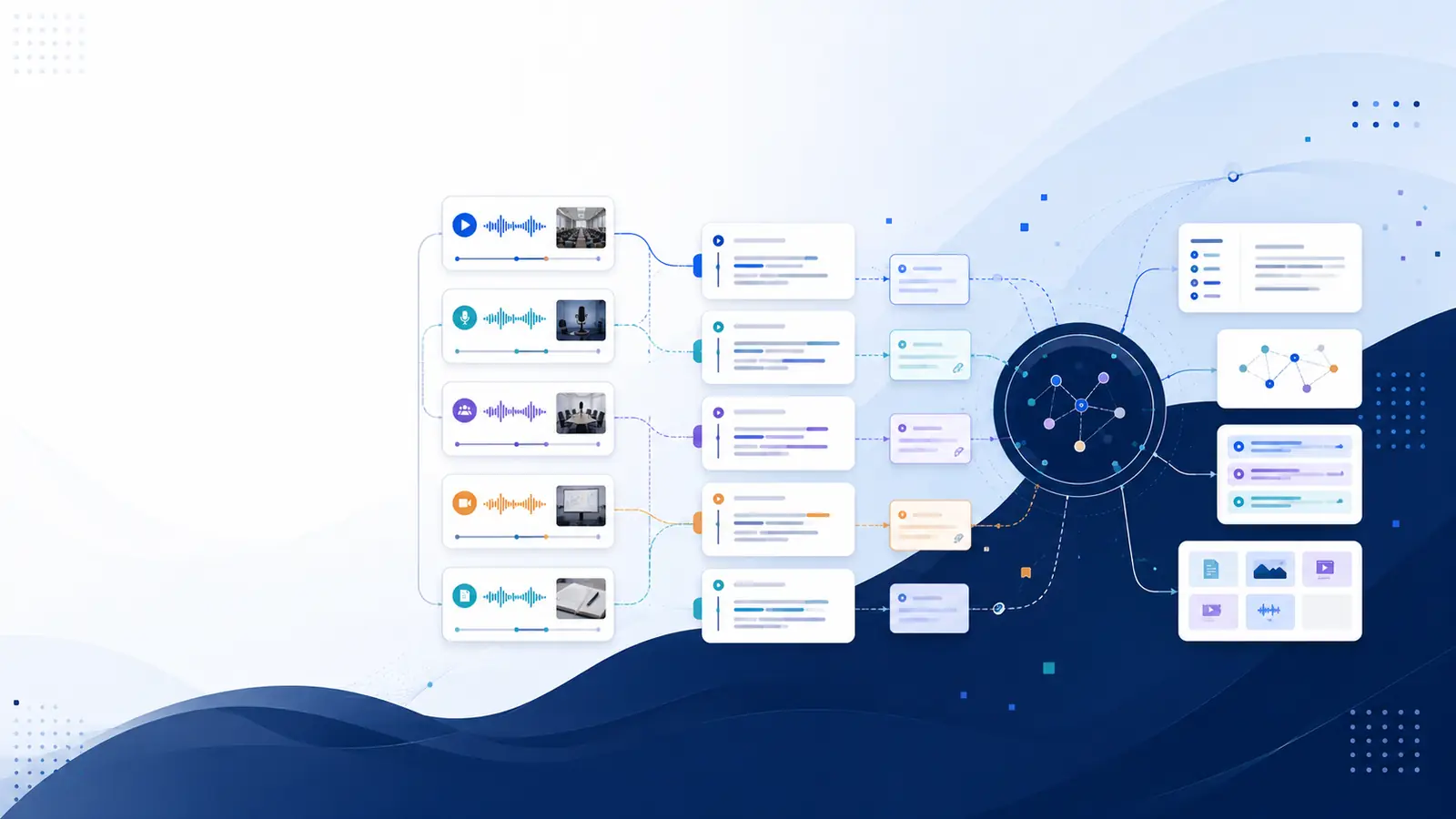
Introduction: Why Recorded Lectures Feel Helpful (But Aren’t)
Most students save recorded lectures with good intentions.
“I’ll revise this later.”
“I’ll watch it again before exams.”
“This will help me understand better.”
But when revision time actually comes, something happens.
The video stays unopened.
This isn’t laziness.
It’s friction.
Why Students Avoid Revisiting Recorded Lectures
Recorded lectures fail as a study tool for one main reason:
They are hard to reuse.
A 60–90 minute lecture demands:
Full attention
Linear watching
Time students often don’t have
When students need one explanation or definition, rewatching the entire lecture feels inefficient.
So they postpone it — and eventually skip it.
The Real Problem: Videos Are Not Searchable
Students don’t remember:
Exact timestamps
Slide numbers
When a topic was explained
They remember:
Keywords
Concepts
Questions they got wrong
But videos don’t allow keyword search.
Without text, there’s no fast way to locate information.
Why Notes Alone Don’t Solve It
Many students take notes while watching lectures.
This helps — but only partially.
Notes:
Miss context
Skip explanations
Depend on writing speed
When students later want to confirm something, notes often aren’t enough.
They still need the original explanation — buried somewhere inside the video.
How Studying Changes When Lectures Become Text
Once a lecture is converted into text with timestamps, the study workflow changes completely.
Students can:
Search for a concept instantly
Jump to the exact moment it’s explained
Scan explanations like a textbook
Revise faster without rewatching
📸 Screenshot reference: Lecture transcript with keyword search and timestamp highlight
At this point, the lecture stops being a video — and becomes study material.
Why Searchable Transcripts Work Better Than Rewatching
Searchable transcripts allow students to:
Study selectively instead of linearly
Focus on weak topics
Revise multiple lectures quickly
Reduce cognitive fatigue
This matches how students actually study — not how platforms expect them to.
Real Student Use Cases
🎓 Exam Revision
Search concepts across multiple lectures before exams.
📚 Concept Clarification
Jump directly to explanations without guessing timestamps.
🧠 Faster Note Making
Turn transcripts into structured notes.
🧑🏫 Online Courses
Reuse recorded lessons efficiently across modules.
Where Libraryminds Fits In
Libraryminds is built for learning workflows that go beyond passive watching.
It offers:
AI transcription with word-level timestamps
Timeline-based search for fast revision
Speaker identification (useful for discussions)
Clean vs raw transcript toggle
Enhanced transcript quality score
Download formats: TXT, SRT, VTT
Transparent, usage-based billing
190 free minutes every month (no credit card)
📸 Screenshot reference: Clean transcript view used for revision
This helps students focus on understanding — not rewatching.
Common Study Mistakes With Recorded Lectures
Saving videos without transcripts
Relying on memory
Rewatching entire lectures for one topic
Not organizing lecture content
Inefficient rewatching, such as reviewing entire recordings to find a
Sources reviewed: pmc.ncbi.nlm.nih.gov, pmc.ncbi.nlm.nih.gov.
FAQs
Why don’t recorded lectures help with revision?
Because they require full rewatching and aren’t searchable.
Are transcripts better than videos for studying?
Yes, for revision and retrieval, transcripts are far more efficient.
Do students need perfect transcripts?
No. Searchability and context matter more.
Can long lectures be studied effectively?
Yes, once converted into searchable text with timestamps.
Final Thoughts
Recorded lectures feel like a safety net.
But without search and structure, they rarely help when it matters most.
When lectures become searchable text, studying becomes faster, clearer, and less stressful.
That’s when recordings finally start working for students.
Related reading
Try Libraryminds for free — upload once, understand everything.