Productivity & Learning Labs
How to Build a Video Second Brain: A Personal Knowledge System for Everything You Watch
You watch hours of YouTube, courses, and tutorials — but you cannot find anything you learned a month later. A Video Second Brain fixes that. It is a personal, searchable knowledge system built around everything you watch.
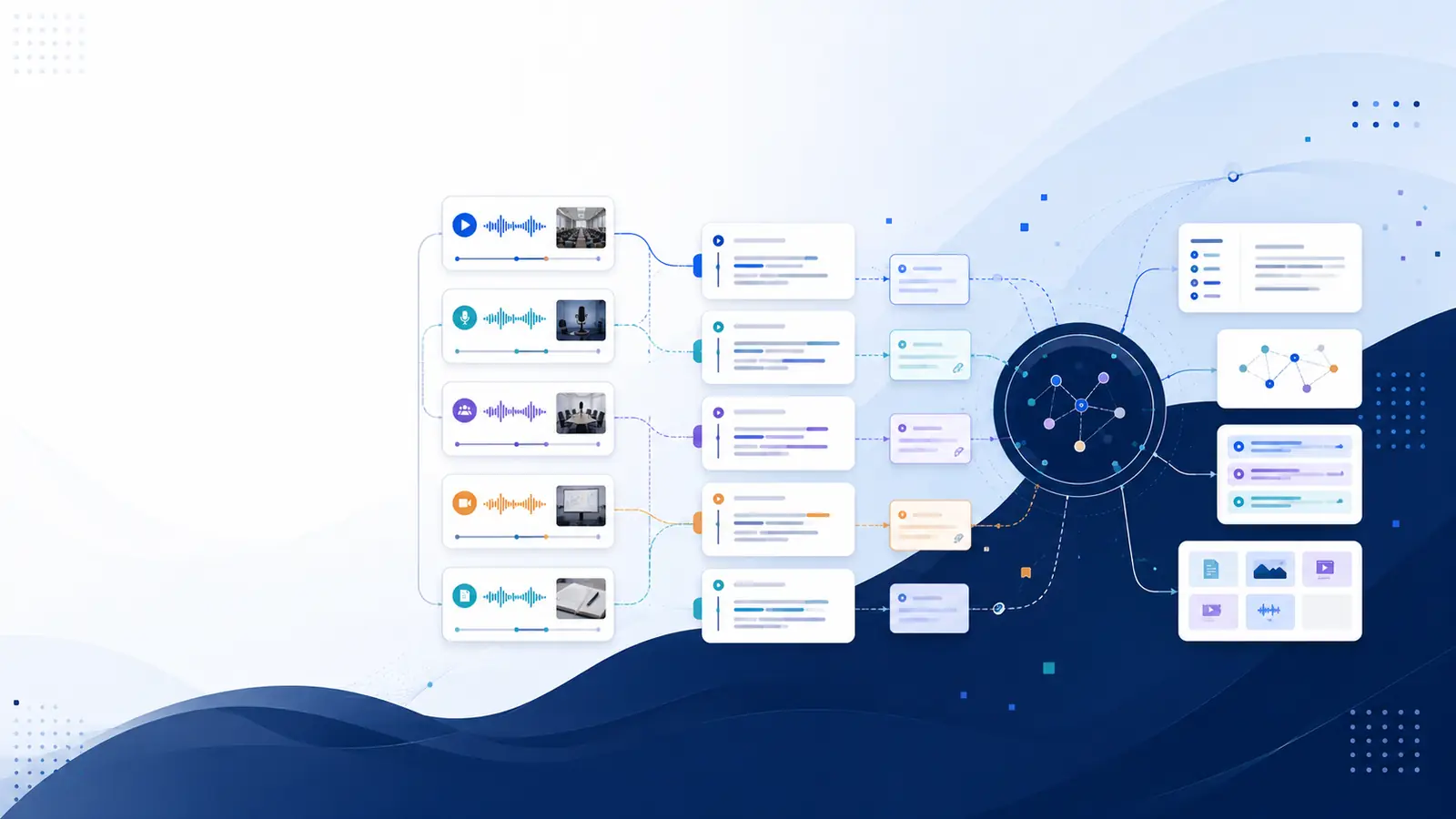
The Video Knowledge Gap: Why We Forget 90% of What We Watch
We are living in the golden age of video learning. Between YouTube, Coursera, and recorded Zoom meetings, we have access to the world’s best experts. But there is a massive problem: Video is a "black hole" for data.
Unlike a book, you can't skim a video. You can't "Ctrl+F" a memory. If you watched a brilliant 2-hour lecture last month and need that one specific formula today, you’re stuck scrubbing through a timeline for 20 minutes.
This is where the concept of a Video Second Brain comes in. It’s not just about watching; it’s about owning the information through a structured Video Knowledge Management System.
What is a Video Second Brain?
A Second Brain (a term popularized by Tiago Forte) is an external system to save and systematically remind us of the ideas and inspirations that happen around us.
A Video Second Brain specifically solves the three biggest hurdles of video learning:
Searchability: Finding the exact second a concept was mentioned.
Synthesis: Distilling a 60-minute talk into 5 key bullet points.
Retention: Turning passive viewing into active recall.
Step-by-Step: Building Your Video Brain with Libraryminds
To build a high-functioning library, you need a workflow that moves content from "Noise" to "Knowledge." Here is how we do it at Libraryminds.
1. Capture with Context
Don't just bookmark a link. When you find a video that matters, index it. Libraryminds doesn't just store the video; it generates a high-fidelity transcript that acts as the "DNA" of your knowledge piece.
2. Semantic Search (The "Ctrl+F" for Video)
Imagine you’re working on a project and remember a speaker mentioning "market fit." Instead of re-watching their entire 3-part series, you search your library. Our Libraryminds core features allow you to jump to the exact timestamp where that phrase—or even that concept—was discussed.
3. AI-Powered Summarization
A Second Brain shouldn't be cluttered. Use our AI-summary tool to create "Atomic Notes." These are short, punchy summaries that give you the "Why" and "How" without the fluff. This is the heart of effective Video Knowledge Management.
4. Active Recall with Flashcards
The "Forgetting Curve" is real. To move information from your "Video Second Brain" into your actual brain, Libraryminds automatically generates flashcards from your saved videos. Spend 2 minutes a day reviewing, and you’ll never have to learn the same thing twice.
The Libraryminds Difference
There are plenty of note-taking apps like Notion or Obsidian, but they are built for text. They treat video like an attachment.
Libraryminds treats video as a first-class citizen.
By building a Video Second Brain, you aren't just "consuming content"—you are building a private search engine of your own expertise. Whether you are a student, a researcher, or a creator, the ability to recall video insights instantly is your new competitive advantage.
Start Your Library Today
The best time to start building your library was a year ago. The second best time is now. Stop watching and start collecting.
A second brain acts as an external store for your knowledge, allowing you to offload thinking and return to ideas later. While some systems process video in real time to mimic human cognition, others focus on creating searchable, structured archives. Choosing between these approaches depends on whether you prioritize immediate interaction or long-term synthesis of your collected media.
Sources reviewed: iit.edu, microsoft.com.