Guides
Searchable Video Transcripts: Find Anything Without Rewatching
Searchable Video Transcripts: The Only Practical Way to Find Anything Inside Long Videos Video is everywhere. Lectures. Podcasts. Interviews. Meetings. Webinars. Courses.
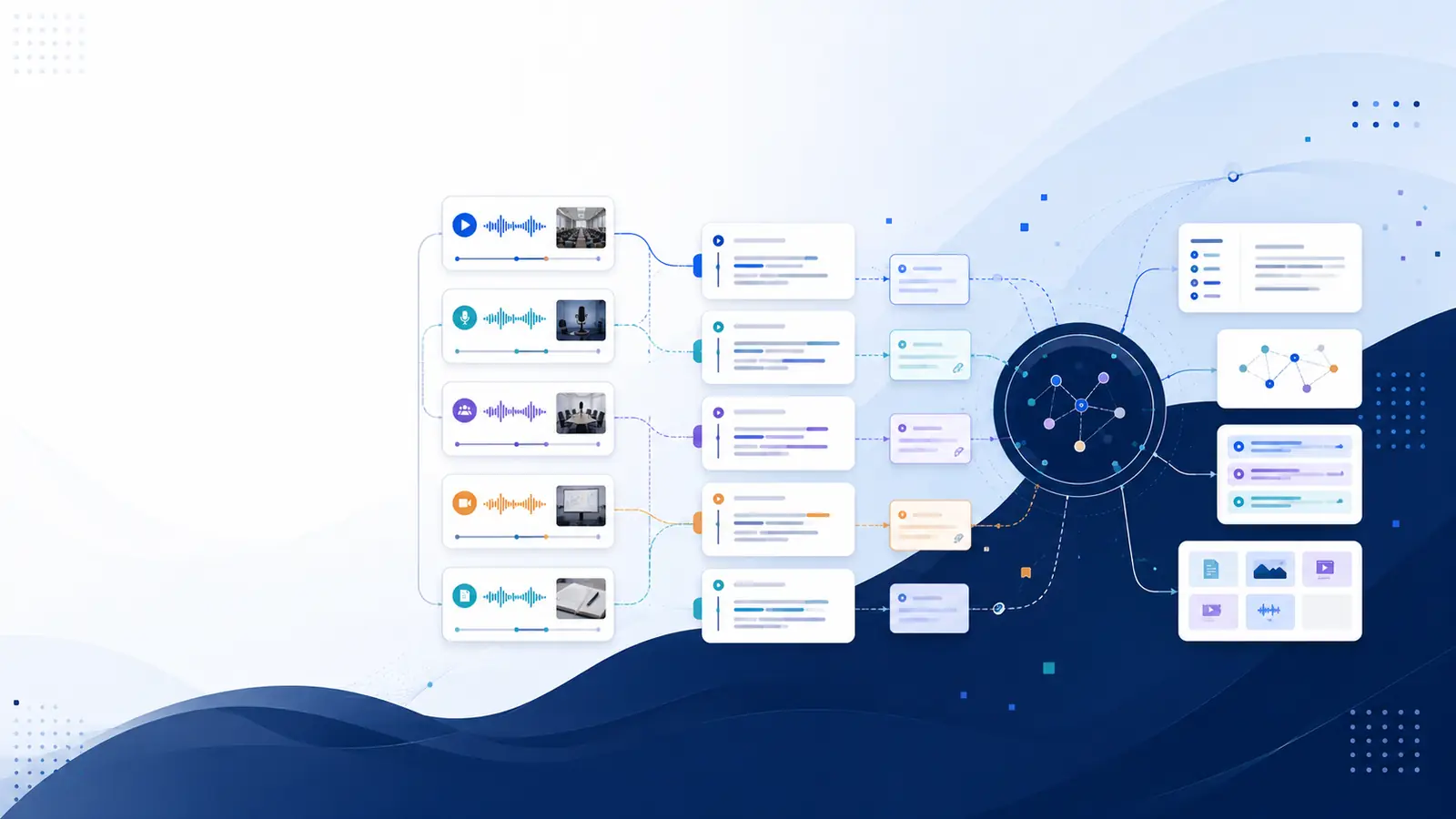
Searchable Video Transcripts: The Only Practical Way to Find Anything Inside Long Videos
Video is everywhere.
Lectures. Podcasts. Interviews. Meetings. Webinars. Courses.
But there’s one frustrating truth most people don’t talk about:
Video is almost impossible to search.
You remember something important was said.
You just don’t remember where.
So you scrub the timeline.
You guess.
You rewatch parts you don’t need.
And you waste time.
This is exactly why searchable video transcripts are becoming essential — not optional.
Why Searching Inside Video Is So Hard
Video is a linear format.
It forces you to consume information in order, from start to finish.
Text works differently.
With text, you can:
Scan
Search
Jump
Compare
Revisit selectively
Video locks information inside minutes and seconds. That’s fine for watching once. It’s terrible for reuse.
What Are Searchable Video Transcripts?
A searchable video transcript converts spoken content into text that you can search like a document — while keeping it connected to the original video.
You type a keyword.
You see exactly where it appears.
You click the timestamp.
You jump to that moment.
No guessing. No scrubbing.
This turns video from a passive format into an active knowledge source.
Why Regular Transcripts Are Still Not Enough
A plain transcript helps, but it has limits.
Without timestamps:
You lose context
Verification takes longer
Navigation is slow
Searchable, timestamped transcripts solve this by combining:
Text + Time + Context
That combination is what makes video usable at scale.
Who Actually Needs Searchable Transcripts?
Content Creators
Find clips, quotes, and moments without rewatching full videos.
Students and Learners
Search concepts instantly instead of rewatching lectures before exams.
Journalists and Researchers
Verify statements and trace sources with confidence.
Teams and Organizations
Turn meetings and trainings into searchable internal knowledge.
Educators
Help learners jump directly to explanations instead of replaying entire lessons.
Why This Matters More as Content Gets Longer
Short videos are manageable.
Long content is not.
A 90-minute lecture, a 2-hour podcast, or a full-day workshop becomes unusable without search.
As content libraries grow, the cost of not being able to search increases every week.
Searchable transcripts scale with content length.
Rewatching does not.
Search Changes How People Learn and Work
Once people can search inside video:
Revision becomes faster
Research becomes more accurate
Content reuse becomes effortless
Knowledge stops getting lost
This is the shift happening right now — from watching content to working with content.
Where Libraryminds Fits In
Tools like Libraryminds are built around this exact idea.
Not just converting speech to text, but turning audio and video into:
Searchable transcripts
Timestamped navigation
Structured summaries
Reusable knowledge
The goal isn’t more features.
It’s less wasted time.
Final Thoughts
If you can’t search something, you can’t really use it.
As video becomes the dominant format for learning, communication, and knowledge sharing, searchable transcripts are no longer a bonus feature — they’re infrastructure.
The future isn’t about watching more videos.
It’s about finding what matters inside them.