Productivity
Unlock Your Data: Natural Language Search for All Your Transcripts
The sheer volume of spoken information in audio and video recordings presents both an opportunity and a significant challenge. These recordings are rich repositories of knowledge, but extracting specific information has traditionally been time-consuming.
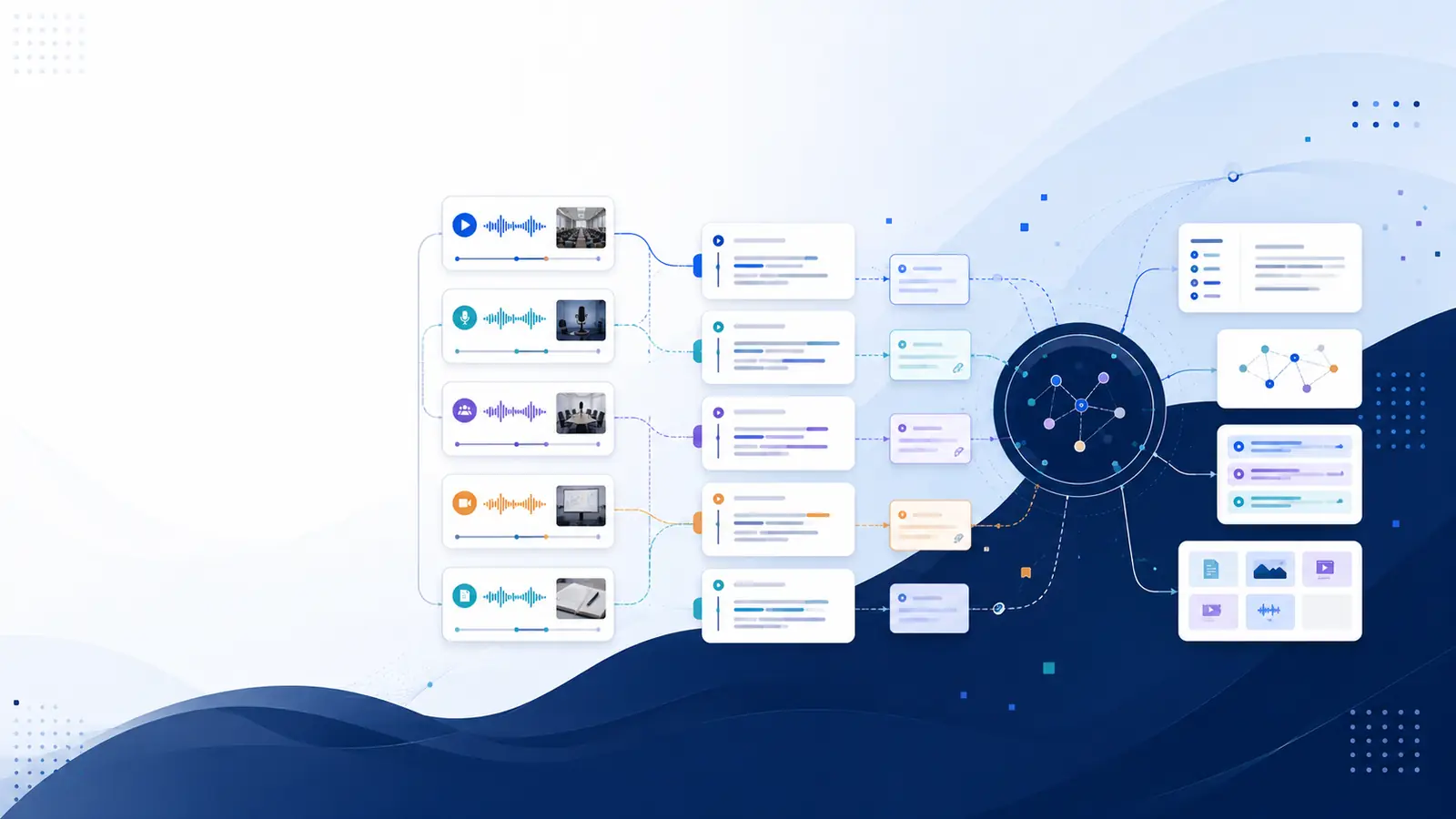
The sheer volume of spoken information captured in audio and video recordings today presents both an opportunity and a significant challenge. From critical meeting discussions and insightful interviews to educational lectures and extensive research data, these recordings are rich repositories of knowledge. However, extracting specific information from them has traditionally been a time-consuming, manual process. This is where the power of natural language search transcripts comes into play, revolutionizing how you interact with and extract insights from your transcribed audio and video content. It transforms unstructured spoken data into an easily navigable and highly searchable resource, making information retrieval effortless and intuitive.
The Challenge of Unstructured Audio and Video Data
Imagine the countless hours of audio and video content you encounter daily: team meetings, client calls, webinars, podcasts, academic lectures, and qualitative research interviews. While these recordings are invaluable for documentation and review, they often become digital black holes. The information within them is locked away, inaccessible without listening or watching through entire segments.
Traditional methods for accessing this information are woefully inefficient. Relying on memory or imprecise timestamps means you often miss critical details or spend excessive time scrubbing through recordings. Even with basic transcription, a simple keyword search can be frustratingly inadequate. If the exact word isn't used, or if the context is critical, keyword searches often fail to deliver meaningful results. This inefficiency leads to:
- Lost Insights: Valuable information, decisions, and ideas remain buried within lengthy recordings.
- Wasted Time: Manually reviewing audio or video to find specific moments consumes significant productive hours.
- Poor Knowledge Management: It's challenging to build a cohesive knowledge base from fragmented, unsearchable spoken data. This impacts effective meeting documentation and overall knowledge sharing.
- Difficulty in Collaboration: Sharing specific insights or referencing key discussions becomes cumbersome without direct links to relevant moments.
- Limited Data Extraction: Drawing comprehensive insights or performing qualitative data analysis software on large volumes of spoken content is nearly impossible without advanced tools.
The core problem is that spoken language, even when transcribed, remains largely unstructured. It lacks the inherent navigability of written text documents. You need a way to bridge this gap, to make your information retrieval audio processes as seamless and powerful as searching through a well-indexed document database.
What is Natural Language Search and How Does It Work for Transcripts?
Natural language search represents a paradigm shift from traditional keyword-based searching. Instead of relying on exact word matches, natural language search leverages artificial intelligence and advanced natural language processing (NLP) techniques to understand the meaning and intent behind your query. When applied to transcripts, this means you can ask questions or describe what you're looking for using everyday language, just as you would in a conversation.
Here’s how AI-powered transcription search typically works:
- Transcription: First, your audio or video content is converted into text. High-quality speech-to-text search engines are crucial here, providing accurate and timestamped transcripts.
- Semantic Analysis: Once transcribed, the text undergoes deep semantic analysis. AI models process the words, phrases, and sentences to understand their meaning, context, and relationships within the entire transcript. This goes beyond identifying individual words to grasping the concepts and entities being discussed.
- Query Understanding: When you input a search query, the system doesn't just look for matching keywords. It interprets your query's intent, identifying the core concepts, entities, and relationships expressed in your natural language question. For example, if you ask, "What were the key takeaways from the marketing strategy discussion last week?", the system understands you're looking for summaries or conclusions related to 'marketing strategy' and 'key takeaways', not just the literal words.
- Contextual Matching: The system then matches your understood query against the semantically analyzed transcripts. It identifies segments that align conceptually with your request, even if they don't contain the exact words you used.
- Ranked Results: Finally, it presents relevant transcript segments, often with timestamps, ranked by their relevance to your natural language query. This allows you to jump directly to the precise moment in the audio or video where your answer is located.
This sophisticated approach transforms raw transcript text into a rich, searchable knowledge base. It's akin to having a highly intelligent assistant who has listened to all your recordings and can instantly retrieve specific information based on your descriptive requests, enabling truly conversational search audio experiences.
Beyond Keywords: The Power of Semantic Understanding
The fundamental distinction between traditional keyword search and natural language search lies in their approach to understanding. Keyword search is a literal matching game: you type a word, and the system finds every instance of that exact word. While useful for very specific, unambiguous terms, it falls short when dealing with the nuances of human language.
Semantic understanding, on the other hand, delves into the meaning of words and phrases. It recognizes that "car," "automobile," "vehicle," and "driving" are all semantically related, even if they are different words. More importantly, it understands the context in which these words are used. Consider these examples:
- Synonyms and Related Concepts: If you search for "customer feedback" in a transcript, a keyword search might miss instances where people said "client opinions" or "user insights." A semantic search video content tool, however, would recognize the conceptual similarity and surface those relevant discussions.
- Contextual Nuances: If a team member says, "The project was a disaster," and later, "We learned valuable lessons from that disaster," a semantic search can differentiate between the negative connotation of the first use and the positive spin of the second, or at least present both for your interpretation. Keyword search would simply flag both instances of "disaster."
- Intent-Based Queries: Instead of searching for "marketing budget allocation," you could ask, "When did we talk about how much money we're spending on marketing for the next quarter?" A semantic search system would interpret your intent and find relevant discussions about budgetary planning and resource distribution, even if the exact phrase "marketing budget allocation" was never uttered.
- Question Answering: You can directly ask questions like, "What were the main objections raised by the client?" The system will understand you're looking for challenges or concerns expressed by the client, and point you to the parts of the interview transcript analysis where these were discussed.
This ability to comprehend meaning and context significantly enhances data extraction transcripts. It allows you to move beyond simply locating words to uncovering actual insights, trends, and specific pieces of information that would otherwise remain hidden. For researchers conducting qualitative data analysis software, this capability is revolutionary, enabling much deeper exploration of their interview data.
A platform like Libraryminds, with its advanced semantic search capabilities, is designed precisely for this. It helps you find the meaning behind the words, ensuring you don't miss crucial information just because of a slight variation in phrasing.
Key Benefits: Why Natural Language Search is a Game-Changer for Transcripts
Adopting natural language search for your transcribed audio and video content offers a multitude of benefits that extend far beyond simple convenience. It fundamentally changes how you interact with your spoken data, unlocking its full potential.
- Significant Time Savings:
Manual review of recordings is incredibly time-intensive. Natural language search drastically cuts down the time required to find specific information. Instead of listening to an hour-long meeting to find a 30-second discussion, you can ask a question and jump directly to that moment. This translates to more time for analysis, decision-making, and productive work, rather than tedious scrubbing.
- Enhanced Accuracy and Relevance:
Because natural language search understands intent and context, the results it provides are far more accurate and relevant than those from a keyword search. You're less likely to miss crucial information due to synonym use or slightly different phrasing. This improved precision means you can trust the search results more, leading to better-informed decisions and more thorough research, especially in areas like interview transcript analysis.
- Deeper Insight Discovery:
By understanding relationships between concepts, natural language search can help uncover insights that might be missed by a human reviewer or a simple keyword search. You can identify patterns, connections, and underlying themes across multiple transcripts more easily. This is particularly valuable for qualitative data analysis software users looking for emergent themes in large datasets.
- Accessibility for All Information:
It makes spoken content as accessible and searchable as written documents. This democratizes information, allowing anyone to quickly find answers or review past discussions without needing to be present at the original recording or possess an intimate knowledge of its contents. This is a significant step forward for information retrieval audio.
- Boosted Productivity and Efficiency:
Whether you're a student trying to pinpoint a specific concept from a lecture, a researcher sifting through hours of interviews, a content creator looking for a quote, or a professional trying to recap a meeting, natural language search streamlines your workflow. It transforms previously cumbersome tasks into quick, intuitive searches, enabling you to focus on higher-value activities. This is critical for effective knowledge management audio.
- Improved Collaboration and Knowledge Sharing:
With precise, timestamped results, it becomes incredibly easy to share specific moments from recordings with colleagues. Instead of saying, "Around the 45-minute mark, we talked about...", you can share a direct link to the exact discussion point. This fosters better collaboration and ensures everyone is on the same page, preventing scenarios where teams forget important meeting decisions.
- Empowered Voice Search Transcripts:
The underlying technology also empowers more sophisticated voice search capabilities. As voice interfaces become more prevalent, the ability to simply "ask" your content for information will become an increasingly powerful tool for interaction and retrieval.
Real-World Applications: Who Can Benefit from Natural Language Transcript Search?
The versatility of natural language search for transcripts means its benefits span across numerous industries and roles. If you work with spoken information, this technology can significantly enhance your productivity and insights.
- Students and Academics:
Imagine having a searchable library of all your lectures and seminars. Instead of re-listening to an entire class to find an explanation of a specific theory, you can simply ask, "Explain the concept of quantum entanglement discussed in Monday's physics lecture." Natural language search helps students quickly revisit complex topics, prepare for exams, and reference discussions. This capability goes beyond simply having recorded lectures; it makes them truly interactive learning resources.
- Researchers and Analysts:
For those conducting qualitative data analysis software, natural language search is a game-changer. Sifting through hours of interview recordings to identify themes, recurring sentiments, or specific participant quotes is typically an arduous task. With natural language search, researchers can ask questions like, "What were the participants' main concerns about data privacy?" or "When did the subject mention their experience with remote work?" This facilitates much more efficient interview transcript analysis and deeper thematic exploration.
- Content Creators (Podcasters, YouTubers, Bloggers):
Repurposing content or finding specific soundbites becomes effortless. Podcasters can quickly locate key discussion points for show notes, blog posts, or social media snippets. YouTubers can find exact quotes for captions or video highlights. You can ask, "Where did we discuss the best strategies for growing an audience?" to pinpoint relevant sections, aiding in mastering video content. This also assists in generating AI summaries of your content, saving considerable time.
- Business Professionals and Teams:
Meetings, brainstorming sessions, and client calls generate vast amounts of spoken data. Natural language search transforms these into actionable knowledge. You can quickly retrieve decisions made, action items assigned, or specific points of discussion. Asking "What was the agreed-upon deadline for the Q2 marketing campaign?" or "Who was tasked with following up on the client's request?" provides instant answers, improving meeting transcript search and accountability. This is crucial for robust knowledge management audio across an organization.
- Journalists and Media Professionals:
Interview transcription and analysis are core to journalism. Natural language search allows journalists to rapidly find critical quotes, contextual information, or specific responses from sources within hours of recorded interviews, significantly speeding up their research and writing process.
- Legal Professionals:
Reviewing depositions, court proceedings, or client consultations can be incredibly time-consuming. Natural language search helps pinpoint critical testimony, specific legal arguments, or key details relevant to a case, making legal research more efficient.
Essentially, anyone who regularly deals with spoken information and needs to quickly extract precise, contextualized data from it will find natural language search to be an indispensable tool. It transforms passive recordings into active, queryable knowledge bases.
Choosing the Right Tool: Features to Look For in a Natural Language Search Platform
As the market for transcript analysis tools grows, selecting the right platform is crucial for maximizing the benefits of natural language search. Here’s a breakdown of essential features to consider:
| Feature Category | Standard Keyword Search Tools | Advanced Natural Language Search Platforms (e.g., Libraryminds) |
|---|---|---|
| Search Capability | Finds exact word or phrase matches. | Understands intent, context, synonyms, and related concepts. Allows conversational queries. |
| Transcription Accuracy | Varies, often single AI model. | High-accuracy, often utilizes multi-provider AI cascades (e.g., Deepgram Nova-2, Google Cloud STT, AWS Transcribe, OpenAI Whisper) for best results. |
| Output & Navigation | Lists instances of keywords, sometimes with basic timestamps. | Provides ranked, timestamped segments, direct links to audio/video, AI summaries, and speaker labels. |
| Speaker Identification | Rarely included. | Robust speaker diarization, labeling who said what. |
| Media Compatibility | May be limited to specific file types or require manual uploads. | Supports various audio/video formats, direct URLs (YouTube, podcasts), and browser recording. |
| Knowledge Management | Primarily a retrieval tool. | Integrates with broader knowledge management audio systems, allows asking questions across entire libraries (Ask My Library, RAG), and offers tools for synthesis like Research Sessions. |
| Data Export | Basic text export. | Exports to various formats (TXT, SRT, VTT) and offers API/webhooks for integration. |
| Privacy & Security | Varies widely. | Prioritizes privacy, often stating content is never used to train third-party AI models. |
| Additional AI Features | Limited or none. | AI summaries, flashcard generation, contradiction detection, knowledge decay tracking, translation, chapter generation. |
When evaluating platforms, prioritize these key features:
- High-Accuracy Transcription: The quality of your search results is directly tied to the accuracy of your transcripts. Look for services that use advanced speech-to-text search technology, ideally with a multi-provider cascade to ensure the best possible output, even for challenging audio.
- True Semantic Search: Ensure the platform goes beyond keyword matching. Test it with nuanced queries or synonyms to verify its ability to understand context and intent. This is the core of effective data extraction transcripts.
- Timestamped Results: The ability to jump to the exact moment in the audio or video where the information was discussed is critical for efficiency and verification.
- Speaker Diarization: For multi-speaker recordings (meetings, interviews), knowing "who said what" is invaluable. This feature labels different speakers in the transcript, enhancing clarity and search precision.
- AI Summaries and Highlights: Beyond searching, look for tools that can automatically generate concise summaries of longer segments or identify key moments. This accelerates review and helps grasp the gist of discussions quickly.
- Broad Media Support: A versatile tool should handle various audio and video file formats, accept direct URLs (like YouTube videos or podcast RSS feeds), and even allow for in-browser recording.
- Integration Capabilities: Consider how the platform integrates with your existing workflow. APIs, webhooks, or Zapier connectors can automate transcription and data transfer, making it a seamless part of your tech stack.
- Knowledge Management Features: For long-term use, features like a personal knowledge base, the ability to chat with your library of transcripts (Ask My Library), or tools for cross-content synthesis (Research Sessions) elevate a simple search tool into a powerful knowledge management audio solution.
- Privacy and Security: Especially for sensitive information, ensure the platform has strong data privacy policies, guaranteeing your content is secure and not used for AI model training without your explicit consent.
Platforms like Libraryminds are designed with these advanced capabilities in mind, offering not just semantic search but a comprehensive suite of transcript analysis tools to manage and derive insights from all your spoken content.
Implementing Natural Language Search: A Step-by-Step Guide
Integrating natural language search into your workflow is a straightforward process that can yield immediate benefits. Here's how to get started:
- Capture Your Audio/Video Content:
The first step is to record or acquire your spoken content. This could be anything from recording your team meetings, conducting interviews, capturing online lectures, saving important webinars, or subscribing to podcasts. Ensure your recordings are of decent quality, as clear audio leads to more accurate transcription.
- Transcribe Your Recordings:
Utilize an AI-powered transcription service to convert your audio/video into text. Look for services that offer high accuracy and timestamping. Platforms like Libraryminds offer automatic transcription of various formats, including direct audio/video URL import, YouTube video transcription, and even podcast RSS subscriptions that auto-transcribe new episodes.
- Upload or Import Transcripts to a Search-Enabled Platform:
Once transcribed, import your text into a platform that supports natural language search. Most advanced AI-powered transcription search tools allow you to upload files, paste text, or even integrate directly with your recording sources. Ensure the platform can handle the volume and variety of your transcripts.
- Start Querying in Plain English:
This is where the magic happens. Instead of thinking of keywords, formulate your questions or descriptions naturally. For instance, instead of searching for "marketing budget," you might ask, "When did we discuss the allocation of funds for the upcoming marketing campaign?" or "What were the main financial considerations for the new product launch?" The system will process your query and identify relevant segments.
- Review and Refine Your Results:
The platform will present you with a list of relevant transcript sections, usually with timestamps and speaker information. Click on a result to jump directly to that point in the original audio or video. If the initial results aren't precise enough, try rephrasing your question or adding more context to your query. Experiment with different ways of asking to get the most out of the conversational search audio experience.
- Leverage Additional Transcript Analysis Tools:
Many natural language search platforms offer supplementary features that enhance the utility of your transcripts. Use AI summaries to quickly grasp the essence of longer discussions, generate flashcards for learning, or utilize features like contradiction detection to identify conflicting claims across your knowledge base. These tools move beyond simple search to comprehensive data extraction transcripts.
- Build Your Knowledge Base:
Over time, as you transcribe and search more content, you'll build a powerful, searchable personal knowledge library. Tools like "Ask My Library" (often based on Retrieval Augmented Generation - RAG) allow you to chat with all your transcripts as a unified personal knowledge base, asking complex questions and receiving synthesized answers based on your collected data. This transforms your unstructured audio/video into a dynamic, queryable asset for knowledge management audio.
By following these steps, you can effectively implement natural language search and unlock the vast potential hidden within your spoken data, making information retrieval audio a seamless and intelligent process.
Future of Information Retrieval: The Evolving Landscape of Transcript Search
The journey of natural language search for transcripts is just beginning. As AI and natural language processing technologies continue to advance, we can expect even more sophisticated and intuitive ways to interact with our spoken data. The future promises a landscape where information retrieval from audio and video is not just effortless but proactively intelligent.
Here are some trends and evolving capabilities to anticipate:
- Hyper-Contextual Understanding: Future systems will move beyond simply understanding the immediate context of a query to integrating broader contextual knowledge. This means understanding your personal search history, your preferences, and even external real-world events to provide even more tailored and relevant results.
- Proactive Insight Generation: Instead of waiting for you to ask, AI systems might proactively surface insights, identify emerging trends across your transcripts, or flag critical information based on predefined criteria. Imagine an AI notifying you of recurring concerns in customer calls or highlighting contradictory statements across meeting transcript search data. Features like Libraryminds' Contradiction Engine are already moving in this direction.
- Multimodal Search: The integration of natural language search with other modalities will deepen. You might be able to search for concepts that appear visually in a video (e.g., "show me instances where 'marketing strategy' was discussed while a specific chart was on screen") or link spoken discussions directly to related documents, images, and other forms of media.
- Advanced Conversational AI Integration: The line between searching and conversing will blur further. You'll be able to have extended, natural conversations with your entire library of transcripts, asking follow-up questions, requesting comparisons, and synthesizing information from various sources in real-time. This will elevate conversational search audio to a new level.
- Personalized Knowledge Graphs: As you interact with your transcripts, AI could automatically build a personalized knowledge graph of your content, showing connections between people, topics, events, and decisions across all your recordings. This would provide an incredibly powerful visual and semantic map for knowledge management audio.
- Real-time Live Transcription and Search: Imagine live meetings or lectures being transcribed in real-time, with the ability to instantly search and pull up related information or past discussions on the fly. This could revolutionize live collaboration and learning environments.
The goal is to make spoken information as fluid, discoverable, and actionable as human thought itself. As these technologies mature, natural language search transcripts will become not just a tool for retrieval but a crucial partner in understanding, learning, and decision-making, continuously enriching your personal and organizational knowledge base. Explore these advancements and more by checking out Libraryminds pricing plans.
Further Reading & Sources
The landscape of information retrieval is rapidly evolving. Moving beyond simple keyword matching, natural language search (NLS) allows us to interact with data using the same conversational language we use every day. This paradigm shift, powered by advancements in Artificial Intelligence and Natural Language Processing (NLP), is transforming how we access and understand vast amounts of information, especially unstructured data like audio and video transcripts. The resources below delve deeper into the theoretical underpinnings and practical applications of these powerful technologies.
For anyone dealing with a growing library of spoken content—be it lectures, interviews, meetings, or podcasts—the ability to perform natural language search on transcripts is a game-changer. Platforms like Libraryminds leverage sophisticated NLP techniques to convert raw audio and video into searchable, structured knowledge. Instead of manually sifting through hours of recordings or relying on exact keyword recall, users can simply ask questions in plain English, and the system intelligently surfaces the most relevant moments, even if the exact words aren't present. This semantic understanding unlocks unprecedented value from your personal and professional knowledge base.
This transformative capability extends beyond basic retrieval. Features such as 'Ask My Library,' which allows users to chat with all their transcripts as a personal knowledge base, or 'Research Sessions' for cross-content synthesis, exemplify how natural language processing makes complex information accessible and actionable. Whether you're a student building a searchable archive of lectures, a researcher analyzing interview data, or a professional managing meeting notes, mastering natural language search on transcripts is key to efficient knowledge management and unlocking the full potential of your captured conversations.
To further explore the world of natural language processing and its impact on search and transcript analysis, consider these valuable resources:
- Using Machine Learning and Natural Language Processing to ... — This study uses machine learning and natural language processing methods to analyze one academic library's chat transcri…
- What is Natural Language Search? How AI is Transforming Search — Natural Language Search (NLS) is a type of search interface that uses Artificial Intelligence (AI) and allows users to q…
- What is natural language search? B2B guide - Mosaic AI — Discover what natural language search is and how NLP search technology transforms enterprise knowledge management.
- Choose a Natural Language Processing Technology - Microsoft Learn — Natural language processing encompasses techniques that analyze, understand, and generate human language from text data.
- Analyzing my own talk transcript with natural language processing — To run this analysis on your talks, grab the transcript from YouTube and check out the NL API quickstart guide. If you w…