Learning
How Transcription Helps Professionals Learn from Industry Experts Effectively
Professionals often seek wisdom from industry leaders. This article explores how transcription helps you effectively absorb and apply expert knowledge from webinars, podcasts, and interviews.
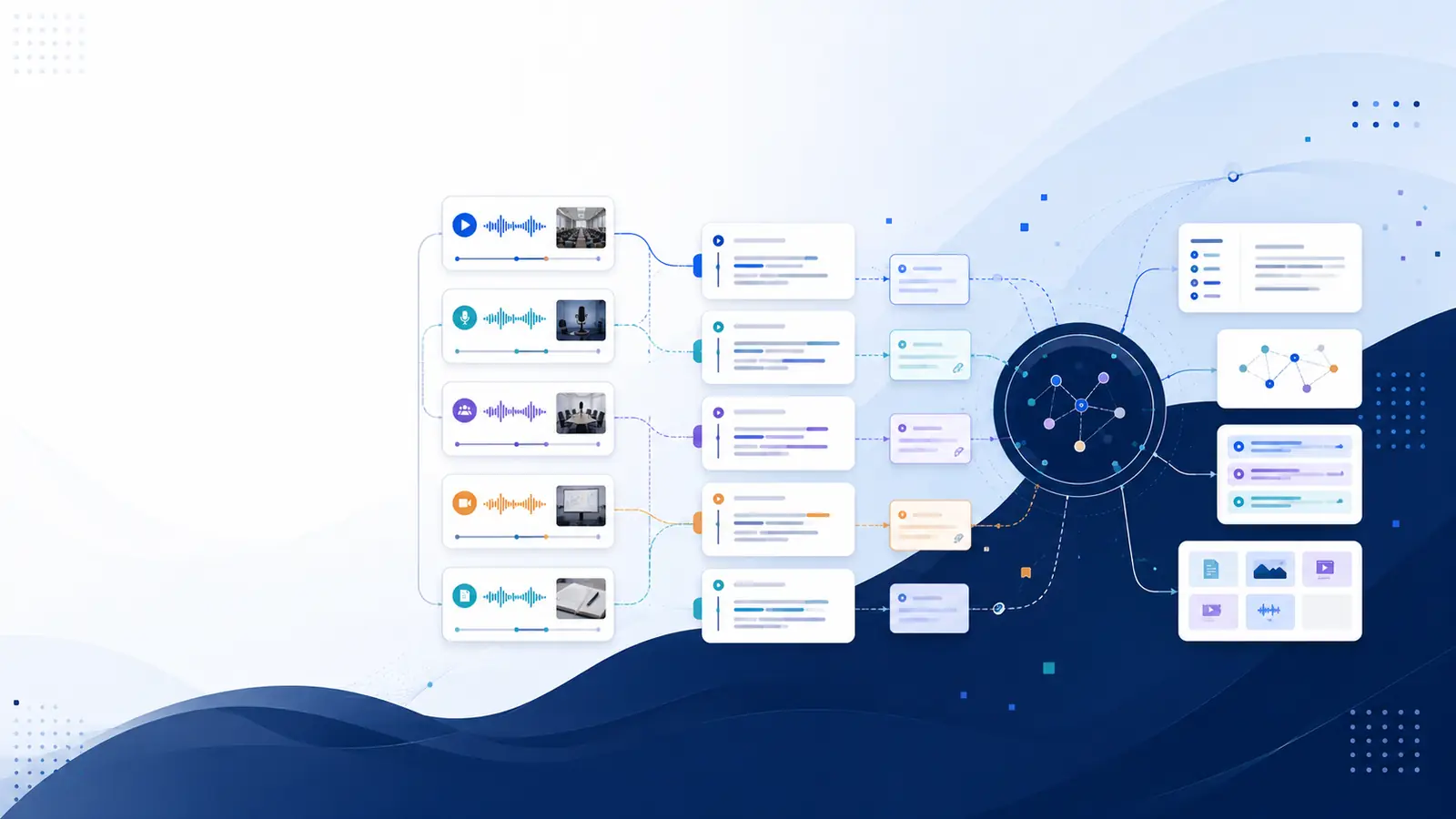
In the pursuit of continuous growth, professionals often seek wisdom from industry leaders, attending webinars, listening to podcasts, and engaging in expert interviews. However, the challenge isn't just access; it's effective absorption and application. This is where transcription learn from experts becomes a game-changer, transforming passive consumption into a dynamic process of insight extraction and knowledge retention. By converting spoken words into tangible text, you move beyond fleeting auditory experiences to build a permanent, searchable, and actionable foundation for your professional development.
Beyond Passive Listening: The Power of Transcription in Expert Learning
Traditional learning from spoken content, whether a live seminar or a recorded podcast, relies heavily on your ability to actively listen, process information in real-time, and retain it. This can be particularly challenging when experts deliver complex ideas, dense data, or rapid-fire insights. Your brain works overtime to comprehend, remember, and identify key takeaways, often leading to significant information loss. Without a concrete record, even the most profound insights can fade into memory's haze, making effective knowledge retention strategies difficult to implement.
The Limitations of Auditory Learning Alone
When you merely listen, your engagement can fluctuate. Distractions are common, and the pace of speech often doesn't align with your optimal learning speed. You might miss crucial details, struggle to recall specific phrases, or find it difficult to connect disparate points made across an hour-long presentation. This passive approach often results in a superficial understanding, hindering your ability to truly internalize and apply the expert's wisdom. Whether you're learning from webinars, podcasts, or live talks, relying solely on auditory input can limit the depth of your understanding and the longevity of your learning.
From Listener to Learner: How Transcription Transforms Engagement
Transcription bridges this gap by providing a written record of every spoken word. This shift empowers you to transition from passive listening to active learning. With a transcript in hand, you can pause, rewind, re-read, and highlight critical sections at your own pace. This visual format allows for deeper processing, enabling you to identify key arguments, pinpoint specific advice, and connect concepts more effectively. It transforms an ephemeral auditory experience into a robust document that serves as a foundation for genuine understanding and sustained engagement. This is a core benefit of modern transcription services, making them indispensable professional development tools for anyone committed to continuous growth and improved active listening techniques.
Unlocking Deeper Insights: How Transcripts Facilitate Analysis and Comprehension
The true value of expert insights lies not just in hearing them, but in dissecting and understanding their underlying implications. Transcripts provide the canvas for this deep analysis, allowing you to go beyond surface-level comprehension to uncover the nuances, patterns, and strategic implications hidden within expert discourse. This methodical approach is crucial for genuine information synthesis and practical skill acquisition methods.
Enhanced Recall and Retention Through Visual Text
Reading a transcript engages different cognitive processes than listening. Visual processing allows for easier scanning, identification of keywords, and the ability to highlight or annotate directly on the text. This multi-sensory engagement significantly boosts recall and retention. When you can see the words, you're better equipped to commit them to long-term memory, ensuring that valuable insights from educational content transcription don't just pass through your mind but become embedded within your knowledge base. This visual anchor helps solidify complex ideas, making them easier to retrieve when needed.
Facilitating Detailed Analysis and Critical Thinking
With a transcript, you can perform meticulous expert interviews analysis. You can dissect complex arguments, scrutinize the logical flow, and identify assumptions or biases. This level of critical thinking is nearly impossible during real-time listening. Transcripts enable you to:
- Isolate Key Statements: Quickly find and review pivotal quotes or statistics without relying on memory.
- Cross-Reference Information: Compare points made at different times within the same discussion or across multiple expert sources, identifying coherence or contradiction.
- Identify Gaps in Understanding: Pinpoint specific areas where you need further clarification or research, allowing for targeted follow-up.
- Unpack Jargon: Look up unfamiliar terms or industry-specific acronyms without interrupting the flow of the expert's message, ensuring complete comprehension.
This deliberate analysis fosters a much deeper and more enduring comprehension of the subject matter, moving beyond rote memorization to true understanding.
Identifying Key Themes and Nuances
Experts often communicate through stories, analogies, and subtle inflections. While audio captures these elements, a transcript allows you to systematically identify recurring themes, patterns of speech, and nuanced expressions that might be missed on a single listen. You can use search functions to track the frequency of certain terms, or manually highlight related sections, revealing the core messages and underlying philosophies of the expert. This systematic approach is invaluable for business insights extraction and developing a holistic understanding of an expert's perspective, enabling you to grasp the full context and implications of their advice.
From Ephemeral to Enduring: Building a Knowledge Base with Transcribed Expert Content
The insights shared by industry experts are often invaluable, but their impact diminishes if they remain scattered and inaccessible. Transcription transforms these transient conversations into a permanent, structured, and profoundly useful knowledge asset. It's about building a personal or team library of wisdom that grows more valuable over time, serving as a powerful engine for your professional growth.
Creating a Searchable Repository of Wisdom
Imagine having a personal database of every expert lecture, every critical webinar, and every insightful podcast you've ever engaged with. Transcripts make this a reality. By digitizing spoken content, you create a fully searchable archive. No more vague memories of "that one speaker said something about X." Instead, you can use keywords, phrases, or even semantic search to instantly locate the exact moment an expert discussed a particular topic. This capability is a cornerstone of effective knowledge retention strategies.
Libraryminds, for instance, offers semantic search across all your transcripts, allowing you to find any moment by describing it in plain English, rather than just relying on exact keyword matches. This means you can ask "What did the speaker say about future market trends?" and get relevant, timestamped results even if the expert didn't use those exact words. This transforms your collection of expert content into a dynamic, queryable source of information, far more powerful than simple audio files.
Integrating Expert Knowledge into Your Workflow
Once transcribed, expert content becomes a dynamic resource you can integrate directly into your daily workflow. You can:
- Extract Action Items: Pull out specific recommendations or tasks directly from the transcript, assigning them to your to-do list or project management software.
- Quote and Reference: Easily cite experts in your reports, presentations, or discussions, strengthening your arguments and lending credibility to your work.
- Develop Training Materials: Use expert insights to create internal training modules, onboarding resources, or FAQs for your team, sharing valuable knowledge efficiently.
- Inform Decision-Making: Consult your personalized knowledge base for expert perspectives and data points before making critical business decisions, ensuring informed choices.
This proactive engagement ensures that expert advice doesn't just inform but actively drives your professional output and contributes directly to your skill acquisition methods.
Combatting Knowledge Decay
Human memory is fallible, and even the most impactful information can fade over time. A transcribed knowledge base acts as a powerful antidote to knowledge decay. Regular review, facilitated by easy access and searchability, reinforces learning. Some advanced platforms, like Libraryminds, even help track content you haven't revisited recently, prompting you to refresh your memory. This systematic approach ensures that the valuable lessons you've absorbed remain fresh and actionable, continually contributing to your professional development tools and ensuring that your learning investment yields long-term returns.
Strategic Application: Using Transcripts to Implement Expert Advice
Learning from experts isn't merely about accumulation of information; it's about the strategic application of that knowledge to achieve tangible results. Transcripts serve as invaluable blueprints for transforming theoretical advice into practical action, driving innovation and efficiency in your work. This direct translation of wisdom into deeds is a hallmark of truly strategic learning.
Developing Actionable Plans from Expert Insights
With a detailed transcript, you can systematically break down an expert's advice into actionable steps. You can highlight specific recommendations, assign them to team members, or integrate them into project plans. For example, if an expert discusses a new marketing strategy, you can extract the precise tactics, tools, and timelines they suggest, converting broad concepts into concrete tasks. This structured approach helps ensure that valuable business insights extraction doesn't get lost in translation but becomes the foundation for measurable progress.
Utilize features like margin notes or flashcard generation from platforms like Libraryminds to distill key action points and commit them to memory, reinforcing the expert's advice through spaced repetition learning. This moves beyond simply knowing what to do, to actively doing it, enabling you to build comprehensive implementation strategies directly from expert guidance.
Sharing and Collaborating on Expert Knowledge
Transcripts are powerful collaborative tools. Instead of relying on individuals to relay information from a webinar or meeting, you can share the exact words of the expert with your team. This ensures everyone has access to the same, unfiltered information, fostering a shared understanding and alignment. Teams can collectively analyze sections, discuss implications, and brainstorm implementation strategies based on a common, authoritative text. This democratizes access to expert knowledge, making it a collective asset for organizational growth and enhanced skill acquisition methods across the board.
Refining Your Skills with Targeted Review
For skill-based learning, transcripts offer a unique advantage. If an expert demonstrates a particular technique or explains a complex process, you can review their instructions word-for-word, alongside the video or audio. This targeted review allows you to practice, refine, and perfect your understanding. You can compare your notes or attempts against the expert's original guidance, identifying areas for improvement with precision. This iterative learning process is essential for mastery and directly contributes to your ongoing professional development tools, ensuring that you not only learn but also perfect your application of expert advice.
Case Studies: Professionals Who Transformed Learning with Transcription
To truly understand the impact of transcription, consider how various professionals have leveraged it to accelerate their learning and achieve their goals. These examples highlight the versatility and power of this approach in real-world scenarios, illustrating the tangible transcription services benefits.
The Marketing Strategist
A marketing strategist regularly attends industry conferences and listens to top marketing podcasts to stay ahead of trends. Previously, she'd take frantic notes, often missing key details. After adopting transcription, she now records all relevant sessions. She then uses the transcripts to perform detailed expert interviews analysis. She searches for mentions of "AI-driven personalization" or "customer journey mapping," extracts relevant paragraphs, and synthesizes them into concise reports for her team. This allows her to quickly identify emerging strategies, cross-reference different experts' opinions, and develop data-backed marketing plans, significantly improving her business insights extraction capabilities and saving hours of manual note-taking and review.
The Tech Innovator
A software developer frequently watches technical lectures and attends virtual workshops to learn new programming languages and frameworks. He found it difficult to follow complex code explanations in real-time. By transcribing these sessions, he can now pause, review the exact terminology, and even copy-paste code snippets or commands directly from the transcript into his development environment. He annotates the transcripts with his own questions and solutions, creating a personalized learning manual. This method has dramatically accelerated his skill acquisition methods, allowing him to grasp advanced concepts much faster and apply them to his projects with greater accuracy.
The Consultant
A management consultant conducts numerous interviews with client stakeholders and industry thought leaders. These conversations are rich with context and nuanced opinions. Relying on memory or brief notes was insufficient. By transcribing these interviews, the consultant gained a comprehensive, verbatim record. This allowed her to perform in-depth analysis of stakeholder perspectives, identify recurring pain points, and accurately quote individuals in her reports. The transcripts became a reliable source for validating her recommendations, enhancing the credibility of her advice, and ultimately delivering more impactful solutions to her clients. This use case demonstrates the power of educational content transcription extending beyond formal education into critical professional interactions.
Choosing the Right Transcription Service for Your Professional Needs
The market offers a variety of transcription solutions, from manual services to advanced AI-powered platforms. Selecting the right one is crucial for maximizing the transcription services benefits for your professional learning. Consider both accuracy and integrated features to ensure the service truly enhances your workflow and supports your strategic learning objectives.
Key Features to Look For
When evaluating transcription services, look for features that directly support deep learning and knowledge management:
- Accuracy: Especially for expert content, precision is paramount. AI-powered services often provide high accuracy, with some offering multi-provider cascades for even greater reliability, like Libraryminds.
- Timestamping: Every word linked to its exact moment in the audio/video. This is critical for cross-referencing and targeted review of specific points.
- Speaker Diarization: Identifying and labeling different speakers, which is essential for multi-person interviews, panel discussions, or team meetings.
- Searchability: Beyond simple keyword search, look for semantic search capabilities that understand context and meaning, making it easier to find relevant information.
- Summarization: AI-generated summaries can save significant time by providing quick overviews of lengthy content, allowing you to grasp the main points rapidly.
- Knowledge Management Integration: The ability to organize, store, and build a personal library of your transcripts, creating a centralized hub for your expert insights.
- Export Options: Flexibility to export transcripts in various formats (TXT, SRT, VTT) for use in other tools or for sharing.
Evaluating Accuracy and Efficiency
While human transcription offers near-perfect accuracy, it can be slow and expensive. AI transcription has rapidly advanced, offering speed and cost-effectiveness with impressive accuracy, particularly for clear audio. Many professionals find that AI transcription, possibly with a quick human review for critical sections, strikes the best balance. When evaluating, consider the types of audio you'll be transcribing – clear speeches versus complex, multi-speaker discussions with background noise will have different accuracy requirements. Platforms that leverage a cascade of AI providers, like Libraryminds, can offer superior accuracy by picking the best output from multiple engines and ensuring reliable information synthesis.
Considering Integration and Knowledge Management
A standalone transcript is useful, but a transcript integrated into a broader knowledge management system is transformative. Look for services that allow you to build a personal library, organize content by topic, and connect insights across different sources. Features like asking questions directly to your library of transcripts (RAG) or generating flashcards for spaced repetition significantly amplify the learning potential. This holistic approach turns raw transcripts into a living, evolving knowledge base that supports continuous professional development tools. To explore how such a system can revolutionize your learning, you might want to View Libraryminds pricing plans.
Maximizing Your Learning: Best Practices for Utilizing Expert Transcripts
Having a transcript is just the first step. The real magic happens when you actively engage with the text to deepen your understanding and solidify your learning. Implementing effective strategies ensures you extract maximum value from every expert interaction, boosting your knowledge retention strategies.
Active Reading and Annotation Techniques
Treat a transcript not as a passive document, but as a workbook. Engage in active listening techniques, even when reading:
- Highlight Key Points: Use different colors to mark core arguments, actionable advice, or intriguing questions that stand out to you.
- Add Margin Notes: Jot down your thoughts, reflections, counter-arguments, or ideas for implementation directly alongside the text, personalizing the content.
- Summarize Sections: After every few paragraphs or distinct topic shifts, write a brief summary in your own words. This forces comprehension and synthesis.
- Formulate Questions: Turn statements into questions to probe deeper or identify areas for further research, fostering critical inquiry.
These practices transform the transcript into a personalized learning tool that reflects your unique cognitive journey, making the expert's words truly your own.
Leveraging Search and Summarization Tools
Modern transcription platforms often come with powerful tools to help you navigate lengthy documents efficiently.
- Keyword and Semantic Search: Quickly locate specific topics, names, or concepts. Semantic search, offered by platforms like Libraryminds, allows you to find relevant passages even if the exact words aren't used, by understanding the meaning of your query.
- AI Summaries: Use auto-generated summaries to get a rapid overview of the content. This is invaluable for quickly refreshing your memory or deciding which sections warrant deeper dives, saving significant time.
- Topic Segmentation: Some tools automatically break down transcripts into logical topics, making navigation easier and allowing you to jump directly to areas of interest.
These features save significant time and ensure you can pinpoint the most relevant information efficiently, boosting your information synthesis capabilities and allowing you to focus on what truly matters for your learning goals.
Regular Review and Spaced Repetition
To combat the natural process of forgetting, integrate regular review of your transcripts into your learning routine. This is a cornerstone of effective knowledge retention strategies.
- Scheduled Review: Revisit key transcripts at increasing intervals (e.g., 1 day, 1 week, 1 month). This spaced repetition helps solidify information in long-term memory.
- Flashcards: Convert critical insights, definitions, or actionable advice into digital flashcards. Some platforms, like Libraryminds, can generate flashcards directly from your transcripts, facilitating spaced-repetition learning and active recall.
- Teach Others: Explain the concepts from your transcripts to a colleague or friend. Articulating the information in your own words is a powerful way to solidify understanding and identify any gaps in your knowledge, proving your mastery.
These deliberate practices ensure that expert wisdom becomes a lasting part of your intellectual toolkit, continually contributing to your professional development tools and fostering deep, enduring learning.
The Future of Professional Development: Integrating Transcription into Your Learning Workflow
The landscape of professional learning is continually evolving, with technology playing an increasingly pivotal role. Transcription, particularly when enhanced by artificial intelligence, is not just a tool for today but a foundational element for the future of skill acquisition and continuous growth. It represents a paradigm shift towards more efficient, personalized, and impactful learning experiences.
Embracing AI-Powered Learning Tools
The integration of AI with transcription services is creating unprecedented opportunities for professionals. AI can not only transcribe with remarkable accuracy but also analyze, summarize, translate, and even generate flashcards from your content. Platforms like Libraryminds are at the forefront, offering features like semantic search, AI summaries, and Ask My Library (RAG) which allow you to chat with all your transcripts as a personal knowledge base. These tools move beyond simple text conversion, turning your transcribed expert content into an interactive and intelligent learning companion. They transform raw data into accessible knowledge, streamlining your educational content transcription process significantly.
Personalized Learning Journeys
With a comprehensive library of transcribed expert content, you can curate a truly personalized learning journey. You're no longer confined to pre-defined courses or generic content. Instead, you can pull specific insights from multiple experts on a particular topic, compare their views, and focus precisely on the areas most relevant to your career goals. This bespoke approach to strategic learning ensures that every moment spent learning is optimized for your individual needs and aspirations, making your professional development more effective and engaging.
Continuous Skill Acquisition
The pace of change in every industry demands continuous skill acquisition methods. Transcription empowers you to keep learning and adapting by making expert knowledge readily available and deeply digestible. Whether it's staying updated on new regulations, mastering a novel technology, or understanding emerging market dynamics, transcribed content provides the raw material for ongoing education. By building and nurturing your personal knowledge library, you cultivate a lifelong learning habit that ensures you remain competitive and innovative throughout your career.
For more insights on leveraging digital tools for learning, consider reading:
- Libraryminds: Search, Extract & Learn From Any Video With AI
- How to Learn From YouTube Videos Without Watching Them Again
Key Benefits of Transcription for Expert Learning
| Benefit Category | Description | Impact on Learning |
|---|---|---|
| Enhanced Comprehension | Converts spoken words into readable text, allowing for visual processing and repeated review. | Deeper understanding of complex topics, ability to grasp nuances and intricate details. |
| Improved Retention | Engages multiple senses (auditory & visual), aids memory recall, and facilitates spaced repetition. | Longer-lasting knowledge, reduced information decay over time. |
| Detailed Analysis | Enables precise scrutiny of arguments, identification of key points, and critical evaluation. | Fosters critical thinking, uncovers hidden patterns and strategic insights. |
| Knowledge Management | Creates a searchable, organized database of expert insights, accessible anytime. | Builds a personal knowledge library, easy retrieval of specific information on demand. |
| Strategic Application | Facilitates extraction of actionable steps, easy quoting, and collaborative learning. | Translates theoretical knowledge into practical, measurable outcomes and innovation. |
| Time Efficiency | Allows for faster scanning, summarization, and targeted review compared to re-listening. | Optimizes learning time, enabling focus on the most relevant content quickly. |
Further Reading & Sources
- Transcribing in the digital age: qualitative research practice utilizing ... — Transcription is the process of converting audio, video or notes into accessible written format for qualitative data ana…
- COCME - Best Practices Guide to Teaching and Learning | Pediatrics — No matter what the educational activity type, this guide can help you be an Educational Jedi Master! Set the stage graph…
- Effective Practice Guides | HeadStart.gov — The Effective Practice Guides provide information about teaching practices that support children's development across EL…