Learning & Knowledge Retention
Why You Forget What You Study (And How to Retain It Without Rewatching Everything)
Why Studying Feels Effective — Until It Doesn’t You finish a chapter. You understand it. You even remember it for a few days. Then slowly, parts of it disappear.
Why Studying Feels Effective — Until It Doesn’t
You finish a chapter.
You understand it.
You even remember it for a few days.
Then slowly, parts of it disappear.
This experience is so common that many people assume something is wrong with their focus or discipline. But in most cases, the problem isn’t how you study — it’s what happens after you finish.
Understanding something once and retaining it long-term are two very different things.
Why Forgetting Is the Default, Not the Exception
Human memory isn’t designed to store large amounts of spoken or passive information permanently.
It’s optimized for:
immediate understanding
short-term usefulness
pattern recognition
When you study from:
lectures
recorded classes
meetings
videos
your brain understands the ideas in the moment but has no reliable way to retrieve them later unless they are revisited.
That’s why remembering for a few days doesn’t mean learning failed — it means storage never happened.
Why Distraction Often Happens After You Finish a Chapter
Many learners notice they get distracted after completing a chapter, not during it.
This isn’t laziness. It’s a transition issue.
Finishing a task signals completion, and the brain looks for reward or relief. Watching videos or scrolling feels earned — but it also creates a clean break from the material, with no “save point” for what you just learned.
Without that save point, forgetting accelerates.
Why Notes and Rewatching Don’t Fully Solve the Problem
Traditional approaches usually fall into two categories:
1. Rewatching content
This is slow, linear, and inefficient. You often spend minutes (or hours) just to find one explanation.
2. Manual notes
Notes help comprehension, but they often:
miss exact phrasing
lose context
aren’t detailed enough for later recall
In both cases, the original explanation still lives inside a video or memory — neither of which is easy to search.
Why Searchable Text Changes How Learning Works
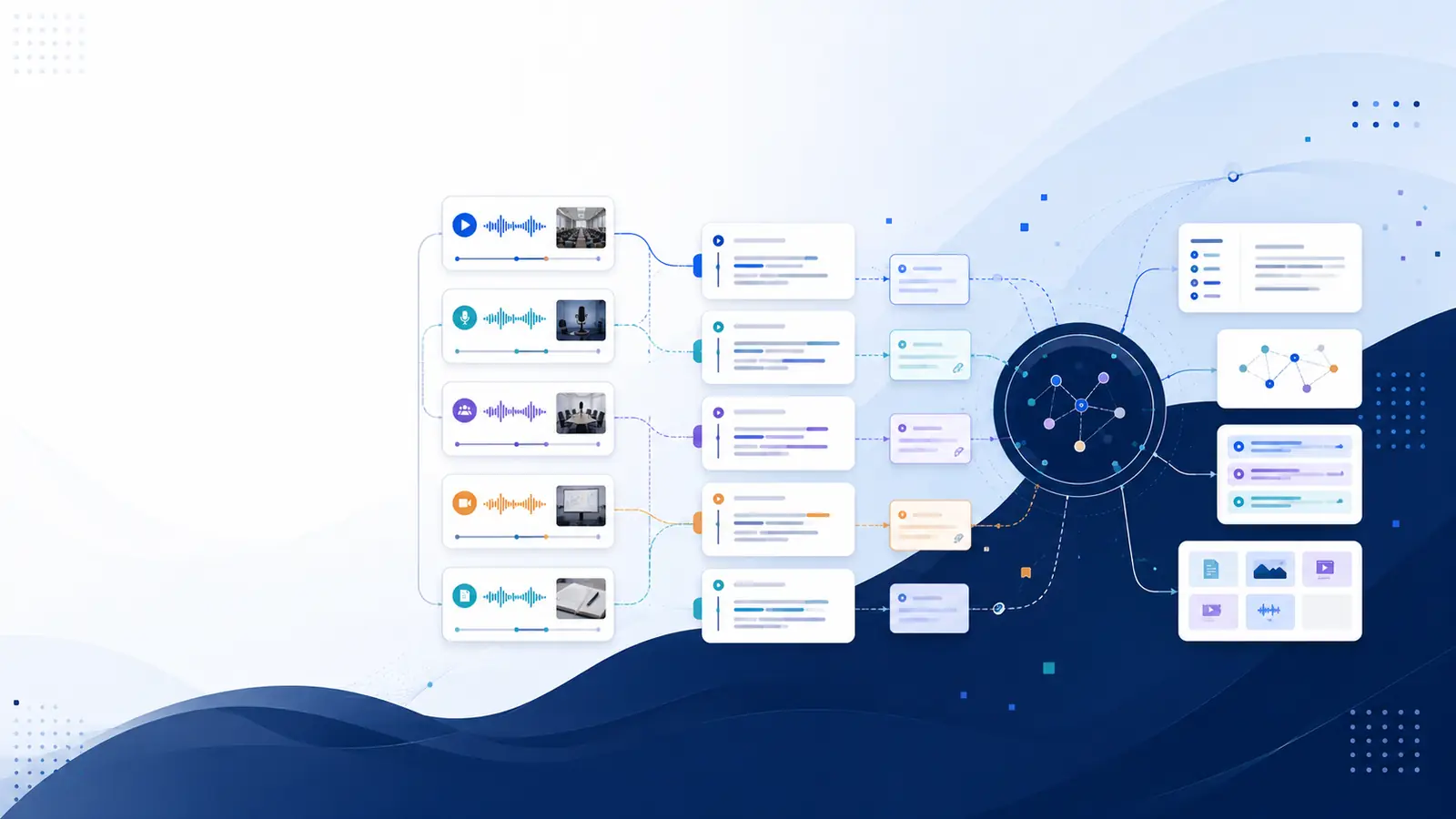
When spoken content becomes text, learning becomes retrievable.
Searchable transcripts allow you to:
jump directly to the exact concept you need
skim instead of rewatch
reconnect ideas across different lectures or meetings
revise selectively instead of starting from scratch
This is the difference between:
“I remember watching this”
and
“I can find this again in seconds.”
Retention improves not because you study more — but because retrieval becomes frictionless.
A Simple Habit That Improves Retention Immediately
Before taking a break after studying, do one small thing:
Write a few sentences answering:
What was the main idea?
What part was unclear?
What could you explain to someone else?
Save this along with the original explanation in a place you can search later.
This creates a retrieval anchor — a place your brain can return to when forgetting begins.
Where Libraryminds Fits In
Many learners reach a point where they have:
watched valuable videos
attended important meetings
completed useful lectures
…but no practical way to return to those ideas later.
Libraryminds is built for this exact gap.
It’s a personal transcript-based knowledge library where you can:
turn videos, meetings, and lectures into searchable transcripts
store all spoken learning in one place
find specific ideas instantly instead of rewatching
reuse insights for notes, revision, or writing
Instead of relying on memory or bookmarks, you build a system where learning remains accessible long after the session ends.
The goal isn’t to consume more content —
it’s to stop losing what you already learned.
The Real Question to Ask Yourself
The most important question isn’t:
“Why am I bad at remembering?”
It’s:
“Where does what I learn actually live after I finish studying?”
If the answer is nowhere specific, forgetting is natural.
If the answer is a searchable system you revisit, retention becomes much easier — and far less stressful.
Final Thoughts
You don’t need more motivation or longer study sessions.
You need:
better storage
easier retrieval
a place for learning to land
When knowledge becomes searchable and reusable, forgetting stops being inevitable — and learning starts compounding.