Information
Why Creators Struggle to Reuse Long Videos
Introduction: The Hidden Problem Creators Don’t Talk About Creators today record more content than ever. Podcasts. YouTube videos. Interviews. Long-form discussions.
Introduction: The Hidden Problem Creators Don’t Talk About
Creators today record more content than ever.
Podcasts.
YouTube videos.
Interviews.
Long-form discussions.
But despite having hours of valuable footage, most creators struggle with one thing:
Reusing their own content.
The problem isn’t effort.
It’s access.
Why Long Videos Are Hard to Reuse
Long videos fail reuse not because they lack value, but because they lack structure.
Once a video crosses 30–60 minutes, creators face the same issues:
They remember what was discussed, not where
Finding specific moments takes too long
Rewatching feels like wasted time
Important insights get buried and forgotten
As a result, great content stays locked inside timelines.
Why Editing Alone Doesn’t Solve the Problem
Many creators try to fix this with editing tools.
Cut clips.
Scrub timelines.
Manually search.
This works occasionally — but it doesn’t scale.
Editing answers how to publish, not how to retrieve.
When content reuse depends on memory or manual effort, it eventually breaks.
The Real Shift: From Watching to Searching
Creators who reuse content consistently change one thing:
They stop treating videos as media
and start treating them as information.
Information needs to be searchable.
To search a video, its spoken content must exist as text.
That’s where transcription changes the workflow.
How Searchable Transcripts Enable Content Reuse
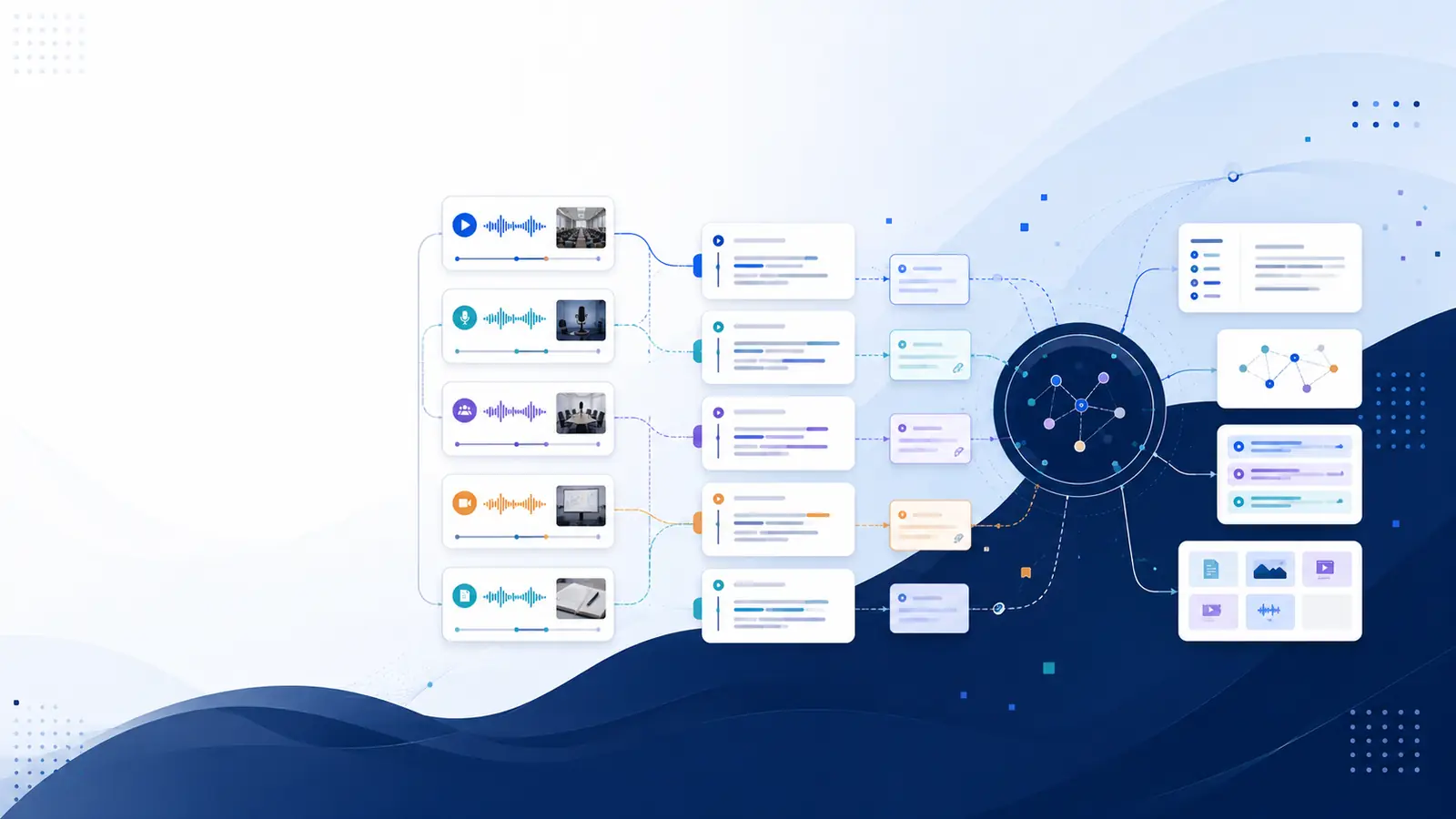
When a long video is converted into text with timestamps, reuse becomes practical.
Creators can:
Search by keywords or phrases
Jump directly to the exact moment
Scan content instead of rewatching
Extract quotes, hooks, and ideas faster
📸 Screenshot reference: Transcript with timeline-based search results
This turns long videos into reusable assets, not one-time uploads.
Real Creator Use Cases
🎥 YouTubers
Find moments worth clipping
Turn videos into blog posts
Create accurate subtitles
🎙️ Podcasters
Generate show notes
Pull quotes for social posts
Revisit discussions months later
🧠 Educators & Course Creators
Reuse explanations across lessons
Build structured notes
Update content without re-recording
✍️ Solo Creators
Turn conversations into written content
Reduce creative burnout
Save time on ideation
Where Libraryminds Fits In
Libraryminds is built for this exact reuse problem.
It helps creators move from recorded content to searchable knowledge by offering:
AI transcription with word-level timestamps
Timeline-based search across transcripts
Speaker identification for clarity
Clean vs raw transcript toggle
Enhanced transcript quality score
Download formats: TXT, SRT, VTT
Transparent, usage-based billing
190 free minutes every month (no credit card)
📸 Screenshot reference: Clean transcript view with search highlighted
The focus isn’t on publishing more —
it’s on reusing what already exists.
Common Mistakes Creators Make
Saving recordings without transcripts
Relying only on memory
Rewatching instead of searching
Not organizing content after recording
These habits lead to lost ideas and wasted time.
Without structured records like transcripts, creators often rewatch entire videos to find specific information. This is less efficient than searching organized, textual content.
Proper content organization, including searchable text, helps avoid relying solely on memory for past recordings. This makes retrieving and reusing insights easier.
Sources reviewed: video.ucdavis.edu, teach.caltech.edu.
FAQs
Why is it hard to reuse long videos?
Because videos aren’t searchable by default.
Is transcription enough for reuse?
Transcription + timestamps + search is what makes reuse practical.
Do creators need perfect transcripts?
No. Searchability and context matter more than perfect wording.
Can old videos be reused later?
Yes, once they’re transcribed and searchable.
Final Thoughts
Creators don’t need more content.
They need better access to the content they already have.
Once long videos become searchable, reuse stops being a struggle and starts becoming a system.
That’s the difference between recording content and building a content library.
Related reading
Try Libraryminds for free — upload once, understand everything.